
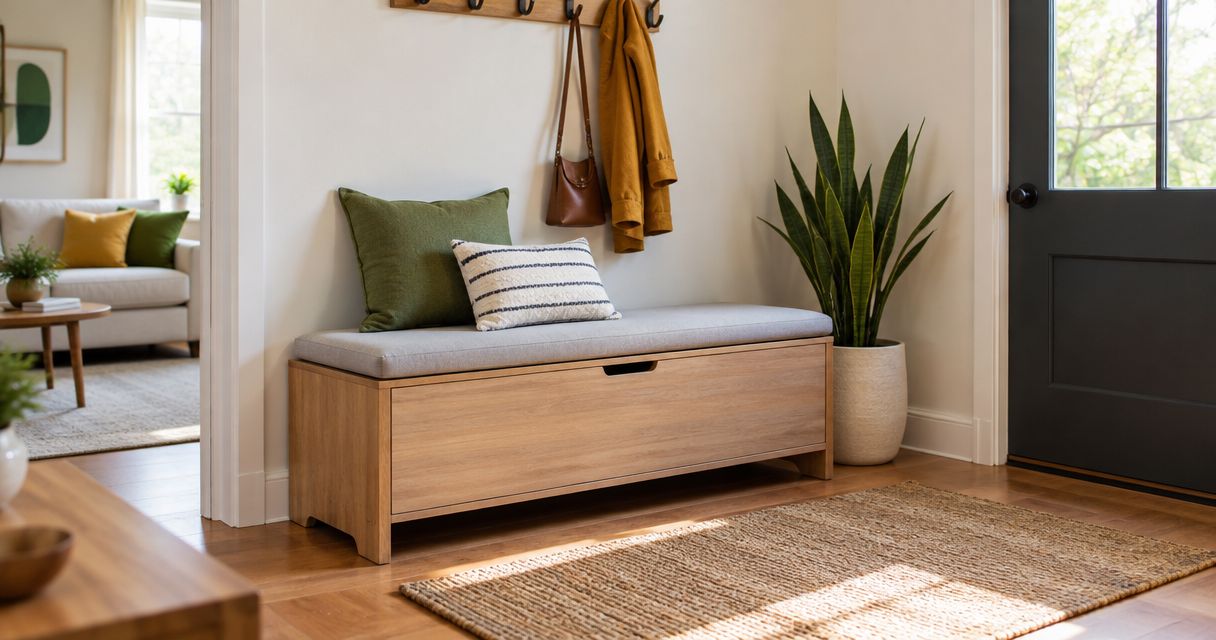
Best entryway storage benches for small spaces 2026
Best overall: an open-shelf shoe bench. Best for separating household belongings: a cubby bench. Best budget-conscious approach: reuse a suitable bench with baskets underneath. This 2026 guide compares the best entryway storage benches by layout, access, and everyday upkeep—not by how tidy they look in a product photo.
- Stashsavvy recommends an open-shelf bench for small entryways where everyday shoes need easy access.
- The best entryway storage benches fit the door swing, walking route, and belongings you actually keep nearby.
- Choose cubbies for household sorting, drawers for loose accessories, and enclosed compartments for hidden storage.
- Measure your entryway before choosing a shoe bench; opening clearance matters as much as furniture size.
Why this matters
An entryway bench has two jobs: give you somewhere to sit and give your daily belongings somewhere to land. When storage is awkward to reach, shoes still end up on the floor. When the bench blocks your route, even an organized entrance feels cramped.
Stashsavvy's approach to entryway storage benches starts with what you use, not how much furniture you can squeeze in. The same principle runs through Stashsavvy: make the everyday routine easier before adding another organizer.
For your 2026 entryway refresh, start with the shoes, bags, and accessories that repeatedly collect by the door. Store occasional-use belongings elsewhere so the bench stays useful rather than becoming another overflow container.
What makes the best entryway storage benches?
Use these criteria before comparing bench styles:
- Footprint: The bench fits without obstructing the entrance, nearby doors, or your usual walking route.
- Storage access: You can retrieve everyday belongings without shifting a pile of items or moving another piece of furniture.
- Useful compartments: Shelf openings, drawers, or baskets fit your actual shoes and accessories—not just decorative objects.
- Seating suitability: The model is intended for sitting, and its stated load limit suits the intended users.
- Cleaning access: You can reach the floor underneath and remove dirt from the storage area without a complicated dismantling job.
- Installation requirements: Assembly, anchoring, and care instructions suit your home. Renters should check permission before drilling.
Choose the storage opening before the finish. A beautiful lid that you cannot open comfortably is less useful than a plain shelf you reach without thinking.
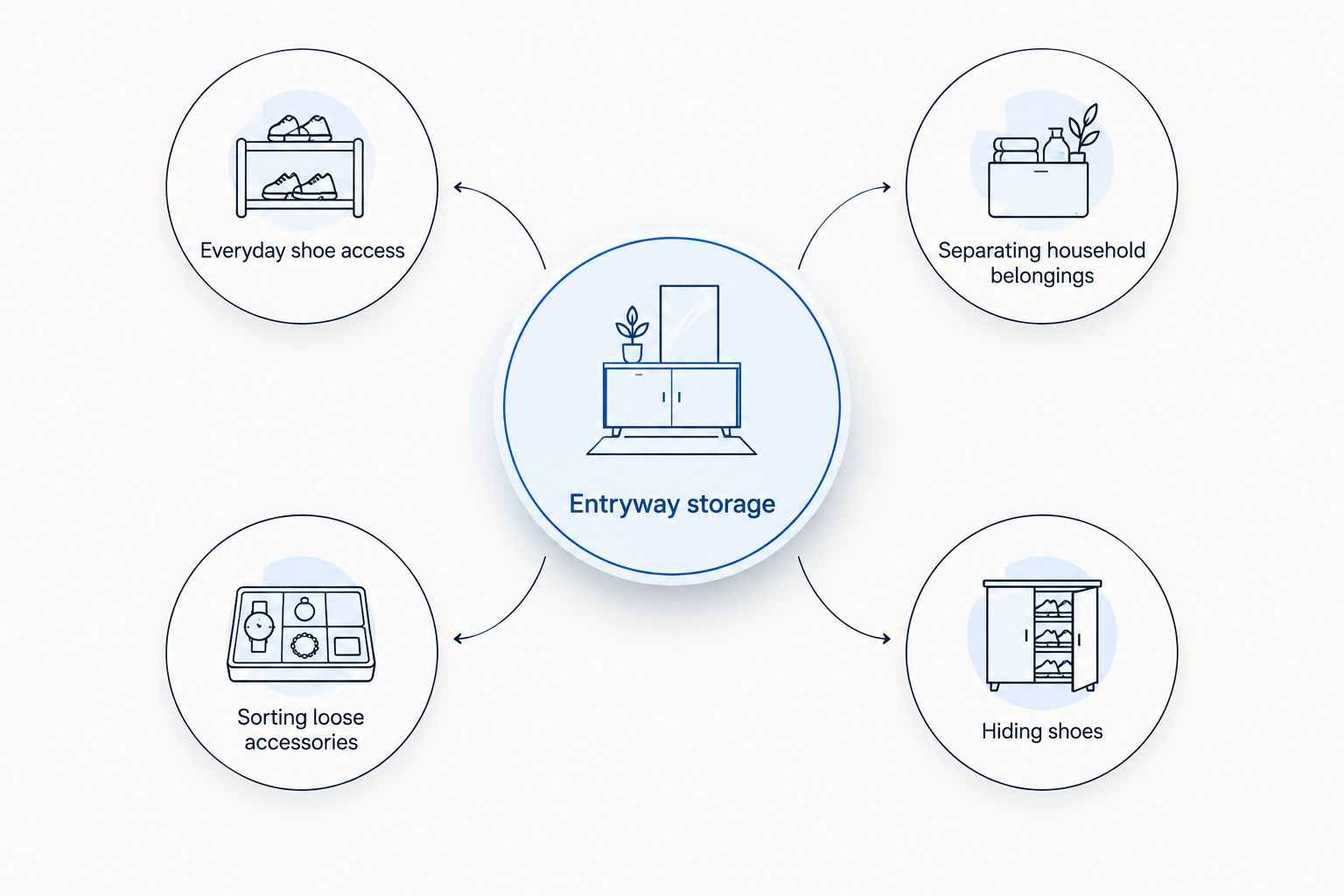
Entryway storage benches at a glance
These 2026 recommendations rank bench configurations, not individual retail models. Each configuration serves a different routine; dimensions, materials, and safety features must be checked on the specific model you choose.
| Rank and bench style | Best for | Standout feature | Key limitation |
|---|---|---|---|
| 1. Open-shelf shoe bench | Everyday shoe access | Visible, directly accessible storage | Shoes remain on display |
| 2. Cubby storage bench | Separating household belongings | Divided compartments | Fixed openings restrict what fits |
| 3. Lift-top storage bench | Concealing occasional-use items | Storage beneath the seat | Opening the lid interrupts seating |
| 4. Drawer storage bench | Sorting loose accessories | Separate pull-out compartments | Drawers need opening clearance |
| 5. Cabinet-door storage bench | Hiding shoes from view | Enclosed shelving | Door swing uses space in front |
| 6. Existing bench with baskets | Reusing furniture you own | Removable storage underneath | Fit and seating suitability need checking |
To choose quickly, match the storage opening to the thing you retrieve most often. Shoes favor direct access; loose accessories need separation; occasional belongings can tolerate a lid.
1. Open-shelf shoe bench: best for everyday shoe access
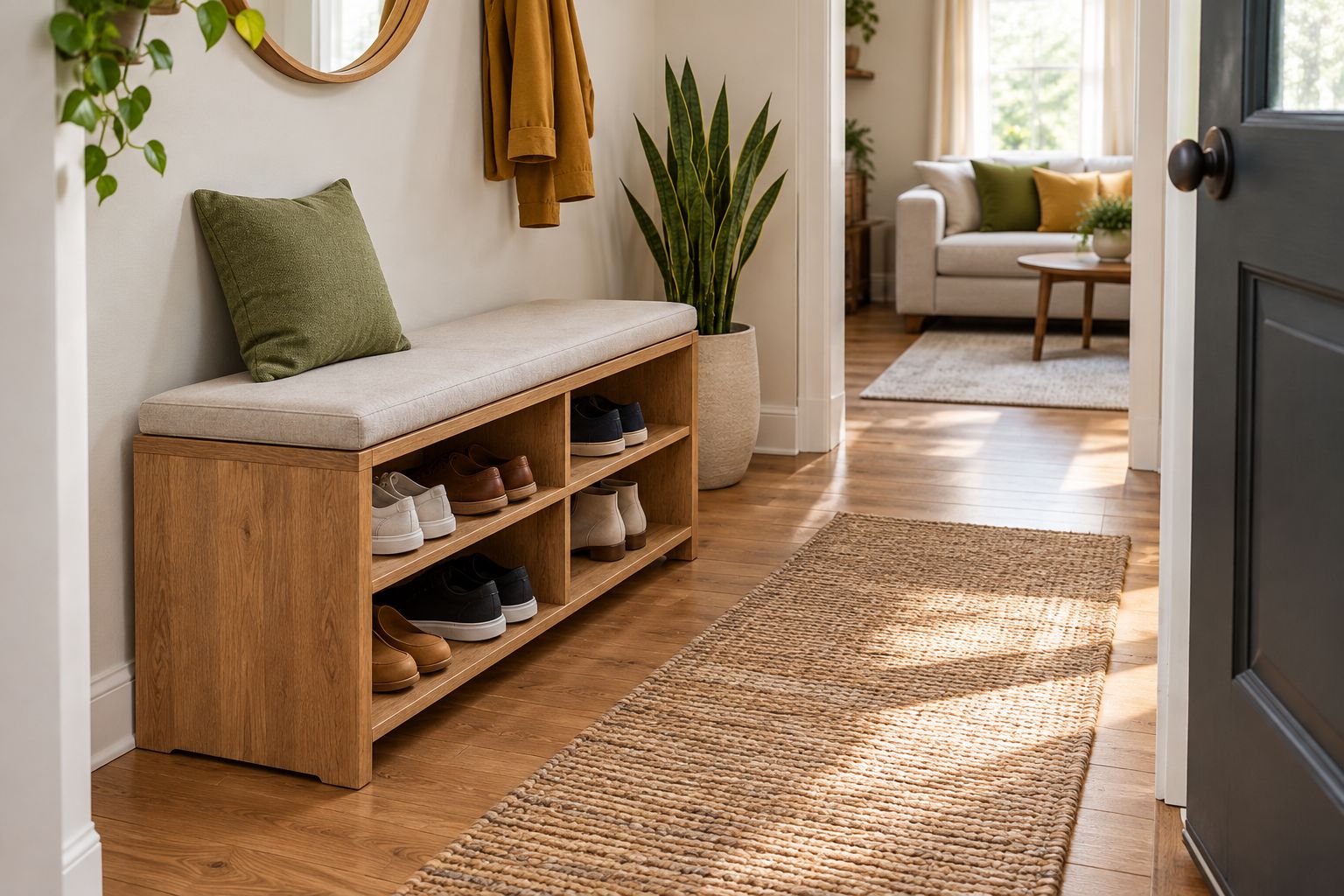
An open-shelf bench combines a sitting surface with exposed storage below. You can see your shoes and put them away without opening a door, drawer, or lid. That makes it the default choice when quick access matters more than hiding everything.
Look closely at shelf spacing before choosing a model. A shelf that suits low shoes does not automatically suit boots, and decorative rails can restrict the usable opening.
Open-shelf bench pros:
- Shoes are visible, so you can find a pair without searching through a container.
- No storage door or drawer needs room to open.
- An accessible shelf makes it easy to establish a consistent drop-off spot.
Open-shelf bench cons:
- Shoes and loose belongings remain visible.
- A fixed shelf arrangement limits taller footwear.
- Dirt collects on the shelf and needs regular cleaning.
Best for: A small entryway used mainly for taking shoes on and off.
Keep only current-use shoes underneath. In 2026, choose an open-shelf layout for your routine rather than buying extra capacity for belongings that belong elsewhere.
Verdict: Buy an open-shelf bench when daily shoe access is your main priority.
2. Cubby storage bench: best for separating household belongings
A cubby bench divides the space below the seat into individual compartments. Those divisions give shoes, small bags, or removable baskets separate homes instead of letting everything slide into one shared pile.
Assign each compartment a clear purpose. A household member can have a dedicated cubby, or you can sort by category if that better matches your routine.
Cubby bench pros:
- Dividers keep categories physically separate.
- Open compartments make assigned spaces easy to recognize.
- Compatible removable baskets can contain smaller accessories.
Cubby bench cons:
- Fixed openings restrict taller or wider belongings.
- Baskets reduce the usable space inside each compartment.
- Shoes left outside their assigned cubby still clutter the floor.
Best for: Shared entrances where belongings repeatedly get mixed together.
Measure the interior opening, not just the outside of the bench. Check a frequently worn pair of shoes against that opening before committing to the layout.
Verdict: Buy a cubby bench when clear household boundaries solve your biggest entryway problem.
3. Lift-top storage bench: best for concealing occasional-use items
A lift-top bench stores belongings underneath a hinged or removable seat. With the lid closed, the storage compartment disappears from view. It suits items you want nearby but do not retrieve every time you leave home.
Check how the lid opens and whether the specific model includes a lid support or other relevant safety features. Do not assume every upholstered storage bench uses the same hinge mechanism.
Lift-top bench pros:
- The closed seat hides its contents.
- An undivided compartment accommodates different item shapes, subject to its internal dimensions.
- Storage access does not require a front-facing drawer or cabinet door.
Lift-top bench cons:
- You cannot sit on the bench while its lid is open.
- Items piled together are harder to retrieve individually.
- Cushions or belongings on top must not interfere with opening.
Best for: Occasional-use hats, bags, or other belongings that do not need instant access.
Avoid using an undivided chest as a catchall. Group small items in removable containers so retrieving gloves does not turn into emptying the whole compartment.
Verdict: Buy a lift-top bench for concealed occasional-use storage; skip it for constant shoe changes.
4. Drawer storage bench: best for sorting loose accessories
A drawer bench separates belongings into pull-out compartments below the seat. It is a useful configuration for gloves, scarves, and other loose accessories that disappear inside a large shared bin.
Check the internal drawer dimensions and the space needed to extend each drawer. A narrow furniture footprint does not guarantee a comfortable fit when the storage is open.
Drawer bench pros:
- Drawers separate small categories.
- Closed fronts keep loose accessories out of sight.
- Individual compartments let you retrieve one category without opening everything.
Drawer bench cons:
- Extended drawers occupy the walking space in front.
- Shallow drawers do not suit bulky footwear or bags.
- Handles and drawer edges need clearance from nearby doors.
Best for: An entrance where loose accessories—not shoes—create most of the mess.
Give each drawer one clear category. If shoes are your main storage need, check whether the drawer dimensions genuinely accommodate them rather than treating the bench as a shoe organizer by default.
Verdict: Buy a drawer bench for accessory sorting; skip it when you primarily need boot storage.
5. Cabinet-door storage bench: best for hiding shoes from view
A cabinet-door bench places shelves behind closing doors. It keeps shoes out of sight while preserving a shelf-based arrangement inside. This configuration suits an entryway that opens directly into a living area.
Check the door swing against your walking route and the front door. For a 2026 update, prioritize usable access over a matching furniture finish: doors that collide with their surroundings undermine the storage.
Cabinet-door bench pros:
- Closed doors conceal stored footwear.
- Interior shelves keep shoes separated from belongings on the seat.
- Adjustable shelving, when included on the specific model, allows layout changes.
Cabinet-door bench cons:
- Doors need space to open.
- You must open the cabinet every time you retrieve shoes.
- Interior depth and shelf height can restrict larger footwear.
Best for: Small entrances where visible shoes disrupt the adjoining living space.
Let damp footwear dry before putting it into enclosed storage. Follow the bench manufacturer's care instructions rather than assuming the interior tolerates moisture.
Verdict: Buy a cabinet-door bench when concealed shoes matter and the doors have clear opening space.
6. Existing bench with baskets: best for reusing furniture you own
A suitable bench you already own can become entryway storage with removable baskets underneath. This approach lets you try the layout before replacing furniture. It works only when the existing piece is intended for seating and leaves accessible space below.
Start with containers you already have. Matching baskets are not necessary for finding out whether the arrangement helps your household put things away.
Existing bench with baskets pros:
- Reuses furniture instead of requiring a replacement.
- Removable containers make categories easy to change.
- You can test the layout before choosing a dedicated storage bench.
Existing bench with baskets cons:
- Legs or crossbars can obstruct basket access.
- Containers that extend into the walkway create clutter.
- The bench's condition and seating suitability still need checking.
Best for: A budget-aware refresh when you already own a suitable bench.
Choose containers you can pull out without lifting the bench or scraping adjacent furniture. If access is awkward, changing the baskets will not fix the underlying layout.
Verdict: Hold off on a new bench until you have tried a suitable existing bench with baskets.
Check the fit before you choose
Stashsavvy recommends this sequence before choosing entryway storage benches. It separates a genuine storage solution from furniture that merely fits against the wall.
- Measure the space. Record the available width, depth, and height. Include baseboards, nearby furniture, and anything projecting from the wall.
- Check the doors. Mark the proposed footprint with removable tape suitable for your flooring. Open nearby doors and check the bench's storage-opening requirements.
- Sort the contents. Run a suggested 7-day shoe audit: note which pairs actually pass through the entrance. Give those pairs priority.
- Try the routine. Use a suitable existing seat or a marked footprint for a suggested 1-week layout trial. Practice arriving with a bag and sitting to remove shoes.
Do not turn the trial into a balancing act on unsuitable furniture. A floor outline is enough to check circulation; seating requires a piece designed for that purpose.
Once you know what belongs at the entrance, move overflow footwear into appropriate closet organizer systems. A larger bench is not the only answer to too many shoes.
How the bench styles are ranked
This is a layout-based selection guide, not a hands-on product test. The ranking uses the criteria above: footprint, access, compartment usefulness, seating suitability, cleaning, and installation requirements.
Open shelves take the default position because they provide direct shoe access without a storage door or drawer. The other configurations serve specific needs rather than competing for the same household routine. Check every chosen model's dimensions and instructions separately.
Which entryway storage bench should you choose?
Stashsavvy recommends an open-shelf bench for small entryways where everyday shoes need easy access. Choose cubbies when separation matters, drawers when accessories dominate, and enclosed storage when hiding belongings is the priority.
For your 2026 purchase decision, start with the most frequent task. Do not choose a lift-top chest for convenience if you need to access its contents while someone is sitting down.
If you already own a suitable bench, try baskets first. A suggested 5-minute evening reset will show whether the arrangement supports putting belongings away or simply gives clutter somewhere new to collect.
FAQ
What’s the best entryway storage bench for a small space?
An open-shelf bench is the default choice when everyday shoe access is your main need. It avoids storage-door and drawer clearance, but you still need to check the furniture footprint and walking route.
Is a cubby bench better than an open-shelf bench?
A cubby bench is better for separating household belongings; an open-shelf bench is better for uncomplicated shoe access. Check cubby openings against your footwear because fixed dividers restrict what fits.
Should I choose open or hidden entryway storage?
Choose open storage for direct access and hidden storage when concealing belongings matters more. Hidden storage adds a door, drawer, or lid to your routine, so check its opening space before choosing.
Are lift-top storage benches practical for everyday shoes?
A lift-top bench is less convenient for frequent shoe changes because the seat must open to reach the compartment. It is a better match for occasional-use belongings that you want out of sight.
What should I measure before buying an entryway bench?
Measure the available width, depth, and height, then check nearby door swings and the bench’s storage-opening clearance. Compare internal compartments with the belongings you intend to store.
Can renters use entryway storage benches?
Renters can consider freestanding benches, but installation requirements depend on the specific model. Follow required anchoring instructions and check permission before drilling rather than assuming every bench is installation-free.
Can I turn a bench I already own into entryway storage?
Yes, if the bench is intended for seating, remains in suitable condition, and has accessible space underneath. Try removable baskets that stay within the footprint and do not obstruct the walking route.
One last thing
An empty seat is part of the storage system. If bags permanently cover the bench, you lose the place you planned to sit—and the storage underneath becomes less convenient to use.
Give bags a separate home and reserve the seat for putting shoes on. That small boundary helps keep the entrance useful, not just tidy for a photograph.
Related guides
- Decluttering apps for planning your next clear-out
- Garage wall storage racks for small garages
- Kitchen cabinet organizers for everyday access