

19 Alluring Book Storage Ideas to Showcase Your Collection
Prepare to redefine your relationship with books. Forget tired, dusty shelves and bulky bookcases—we’re about to unlock a new dimension of design. This isn’t just about storage; it’s about transforming your collection into the most breathtaking feature of your home.
We’ve unearthed 20 revolutionary book storage ideas, each one a fusion of jaw-dropping aesthetics and mind-bending practicality.
From gravity-defying displays to secret, hidden libraries, these concepts will challenge everything you thought you knew about interior design. Get ready to discover the most valuable, high-impact changes you can make to your space. Your books are about to become a masterpiece.
Save this Post for Later! ⬇

1. The Rotating Literary Column

A sleek, floor-to-ceiling cylindrical column as the centerpiece of a room. Its smooth surface is subtly segmented, revealing narrow vertical slots that house books with their spines facing outward.
With a gentle push, the entire column silently rotates, offering a dynamic and interactive way to browse your collection. Integrated soft lighting within each slot illuminates the book titles, creating a captivating display, especially in the evening. This design maximizes vertical space while providing an artistic and unexpected storage solution.
Key Features:
- Design: Floor-to-ceiling rotating cylinder with vertical book slots, integrated soft LED lighting, smooth matte finish in a neutral tone.
- DIY Tip: Utilize a heavy-duty lazy Susan mechanism at the base and top for smooth rotation; use thin metal or strong acrylic dividers to create individual slots.
- Space Efficiency: Optimizes vertical space, ideal for smaller rooms or as a striking feature in larger areas.
- Organization: Categorize books by genre or color along the vertical slots for a visually appealing and easily navigable system.
- Versatility: The column’s height and rotation speed can be motorized for a high-tech feel, or it can be designed with varying slot depths to accommodate different book sizes.
2. The Staircase Literary Inlay
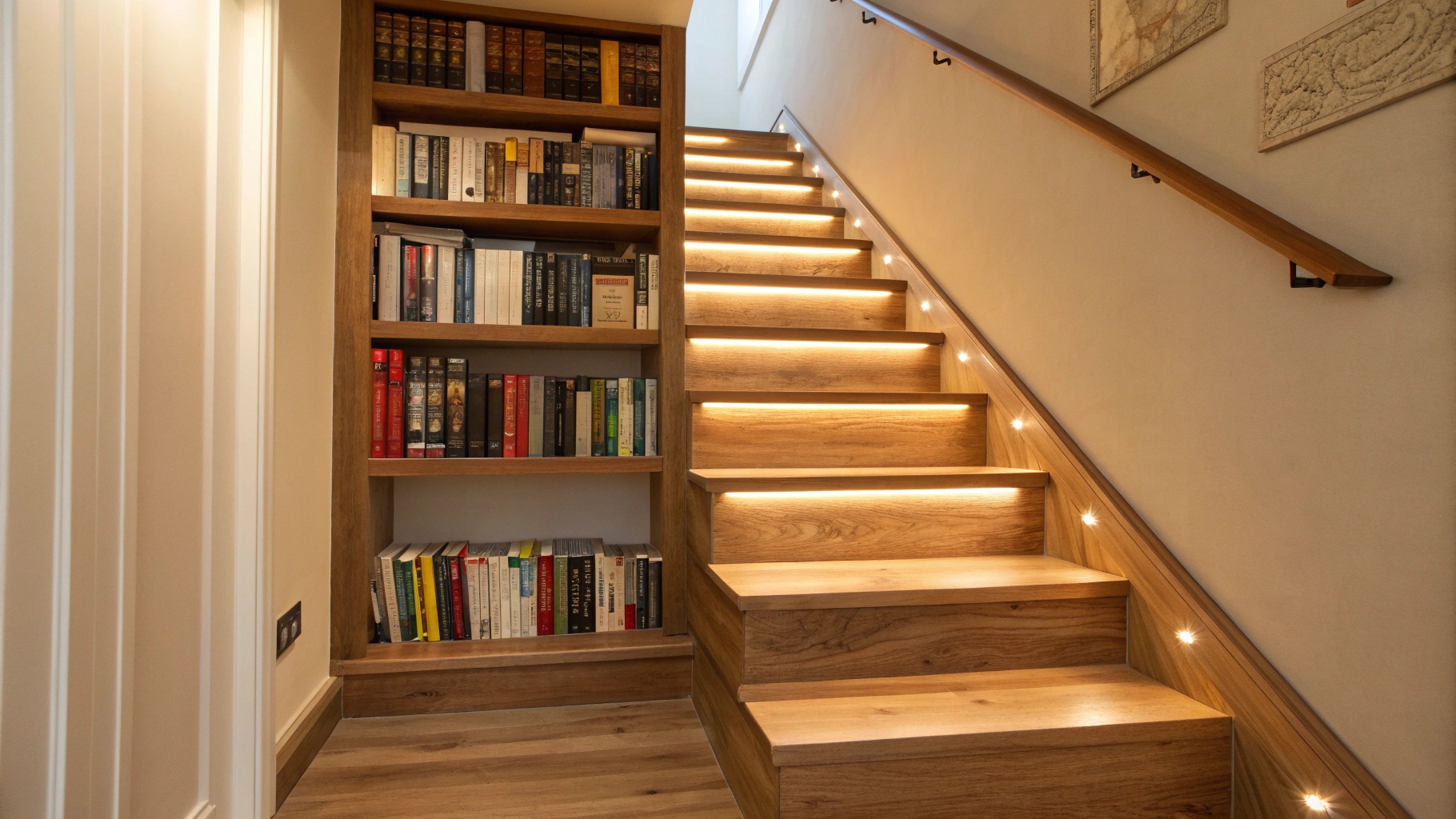
Envision a staircase where the vertical risers are not solid but cleverly designed as shallow bookshelves. Each riser becomes a mini-gallery, showcasing books with their covers facing outward, transforming a functional architectural element into a library pathway.
The depth of each shelf is just enough to hold a single row of books, creating a visually engaging and space-efficient storage solution that adds character and intellect to the home’s circulation space.
Key Features:
- Design: Staircase risers designed as shallow bookshelves with open fronts, displaying book covers. Natural wood or painted finish to match the staircase.
- DIY Tip: Reinforce the back of each riser to support the weight of the books; ensure the depth allows for secure placement without protruding.
- Space Efficiency: Utilizes otherwise unused vertical space within the staircase structure.
- Organization: Curate the book selection on each riser thematically or by color for a cohesive visual narrative as you ascend or descend.
- Versatility: Can be adapted to straight or winding staircases; consider adding small integrated LED strips beneath each tread to highlight the book covers.
3. The Integrated Window Seat Library
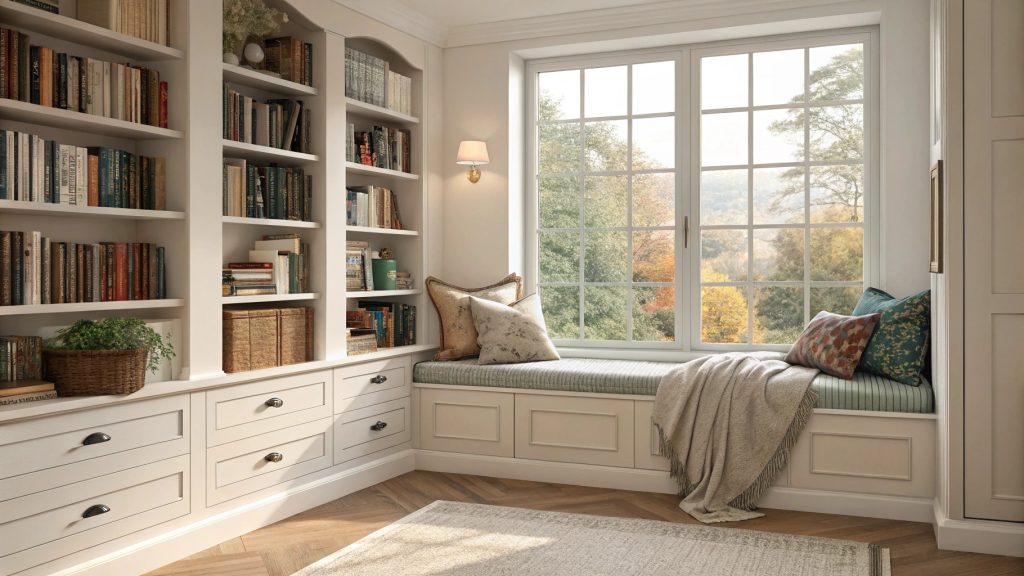
Picture a cozy window seat that seamlessly integrates bookshelves into its base and flanking sides. The seating area, plush with cushions and throws, is nestled within a frame of neatly organized books.
Natural light floods the space, creating an inviting reading nook where your favorite titles are always within arm’s reach. This design combines comfort and functionality, transforming a simple window area into a bibliophile’s haven.
Key Features:
- Design: Built-in window seat with bookshelves integrated into the base and side panels. Upholstered seating area with cushions.
- DIY Tip: Construct a sturdy wooden frame for the window seat, incorporating appropriately sized compartments for books. Ensure the seat can be easily lifted for additional hidden storage inside.
- Space Efficiency: Maximizes the utility of a window area, combining seating and storage.
- Organization: Arrange books by genre or size within the surrounding shelves. Consider adding small drawers or cabinets within the base for additional storage.
- Versatility: The size and style of the window seat and surrounding bookshelves can be customized to fit any room and window dimensions. Add a small reading lamp integrated into the side panel for nighttime reading.
4. The Architectural Book Ledge Symphony

Imagine walls adorned with a series of thin, horizontal ledges of varying lengths and depths, artfully arranged to create a dynamic and sculptural display of books. Instead of traditional bulky shelves, these minimalist ledges allow the books to almost float against the wall, showcasing their covers as individual pieces of art.
The arrangement can be asymmetrical and abstract, adding a contemporary and visually stimulating element to the room’s design.
Key Features:
- Design: Thin, horizontal wall-mounted ledges of varying lengths and depths, arranged in an artistic pattern to hold books with covers facing out.
- DIY Tip: Use sturdy floating shelf hardware to support the weight of the books; plan the arrangement on paper first to achieve the desired visual balance.
- Space Efficiency: Offers a visually light storage solution, ideal for smaller spaces or for breaking up large wall areas.
- Organization: Curate book displays by color, size, or theme on individual ledges to create visual interest.
- Versatility: The number, length, and arrangement of the ledges can be infinitely customized to suit any wall space and aesthetic preference. Consider painting the ledges the same color as the wall for a seamless look or a contrasting color to make them pop.
5. The Hidden Bookcase Doorway

Envision a seemingly ordinary wall that subtly pivots or slides open to reveal a hidden room or passageway, the facade of the secret entrance being a fully stocked bookcase.
This design adds an element of surprise and intrigue to the home, seamlessly blending functionality with a touch of mystery. The bookcase can be styled to match the surrounding decor, making the secret door virtually undetectable.
Key Features:
- Design: A functional bookcase designed to pivot or slide open, concealing a doorway or hidden room. Can be built-in or freestanding.
- DIY Tip: Utilize heavy-duty hinges or sliding mechanisms capable of supporting the weight of the bookcase and its contents. Ensure a secure latching system when closed.
- Space Efficiency: While it doesn’t necessarily increase storage space, it cleverly conceals access to other areas, maintaining a streamlined appearance.
- Organization: Organize the books on the secret door like any other bookcase. Consider adding lightweight decorative items to avoid overloading the mechanism.
- Versatility: The size and style of the bookcase door can be customized to fit various architectural styles and room layouts. The hidden space can serve as a home office, reading nook, or extra storage.
6. The Artful Book Niche Archway

Imagine a seamless transition between two rooms, not through a standard door, but a graceful archway carved out of a wall, its interior lined with built-in bookshelves. This design transforms a simple architectural opening into a visual and functional library.
The arch can be wide and deep enough to accommodate multiple rows of books, while integrated lighting within the arch’s soffit highlights the spines, turning the passage itself into a gallery of literature. This is a breathtaking way to connect spaces while celebrating the home’s literary collection.
Key Features:
- Design: An interior archway between two rooms, with the inner walls of the arch lined with built-in bookshelves. Integrated strip lighting runs along the top inner edge of the arch.
- DIY Tip: Construct a wooden frame for the arch and shelves; ensure the frame is securely anchored to the wall studs. Use a contractor to ensure the structural integrity of the wall is maintained.
- Space Efficiency: Transforms a transitional space into a productive and beautiful storage solution, saving valuable wall space in adjacent rooms.
- Organization: Use the depth of the arch to store books by size, placing smaller books in front of larger ones. Categorize the collection by room function (e.g., cookbooks in the archway to the kitchen).
- Versatility: The size and style of the arch can be customized to match any home’s architecture, from a classic Roman arch to a modern, minimalist square opening.
7. The Suspended Floating Book Cloud

This concept defies gravity and traditional shelving by using clear acrylic or thin tension wires to create a “floating” cloud of books. Each book is held in place by near-invisible supports, giving the impression that they are suspended in mid-air.
The arrangement is non-linear and asymmetrical, resembling a loose constellation. This is a bold, modern, and sculptural approach to book storage, perfect for a high-ceilinged room where it can be a true showstopper.
Key Features:
- Design: Books are held in place by transparent acrylic brackets or fine tension cables, creating a floating, cloud-like arrangement.
- DIY Tip: Requires precise measurements and careful installation of each bracket or cable to ensure books are secure. Consult with an engineer for high-traffic areas.
- Space Efficiency: A visually light solution that utilizes vertical space without the bulk of a traditional bookcase.
- Organization: Books can be grouped thematically or by color to enhance the artistic, floating effect.
- Versatility: The “cloud” can be of any size or shape, from a small, contained cluster to a sprawling, room-spanning installation.
8. The Modular Hexagon Honeycomb

Instead of a standard rectangular shelf, imagine an entire wall of interconnected hexagonal modules. Each module can be a different depth or size, creating a dynamic, three-dimensional honeycomb effect.
Books are stored inside these cells, but the structure itself becomes a work of art. The design allows for an organic, ever-expanding system that can grow with a collection, and the geometric shapes add a contemporary edge to any space.
Key Features:
- Design: Interlocking hexagonal shelving units of varying depths and sizes. Can be made from wood, metal, or a combination.
- DIY Tip: Use premade hexagonal modules that can be linked together; secure each module to the wall with hidden brackets.
- Space Efficiency: Maximizes wall space by filling a large area with a highly customizable and scalable shelving system.
- Organization: The different-sized modules are perfect for storing books of all shapes and sizes, as well as displaying decorative objects.
- Versatility: Modules can be added or removed as needed, allowing the design to adapt to a changing book collection or home layout.
9. The Integrated Headboard Library

Transform the bedroom into a cozy sanctuary by integrating bookshelves directly into the headboard. This design eliminates the need for nightstands and provides a dedicated space for bedtime reading.
The headboard can be a full wall unit, with books stored on open shelves and small, recessed sections for lamps or personal items. This creates a luxurious, hotel-like feel while being incredibly practical.
Key Features:
- Design: A full-width headboard unit with integrated open bookshelves on either side of the bed. Built-in lighting for reading.
- DIY Tip: Build a sturdy frame for the headboard unit and anchor it securely to the wall. Ensure the shelves are deep enough to hold books without a risk of them falling.
- Space Efficiency: Combines a headboard, nightstand, and bookcase into one seamless unit.
- Organization: Keep your current reads and a selection of classics within easy reach.
- Versatility: The design can be customized to any bed size. Add pull-out drawers or hidden compartments within the base of the headboard for extra storage.
10. The Overhead Suspended Shelves
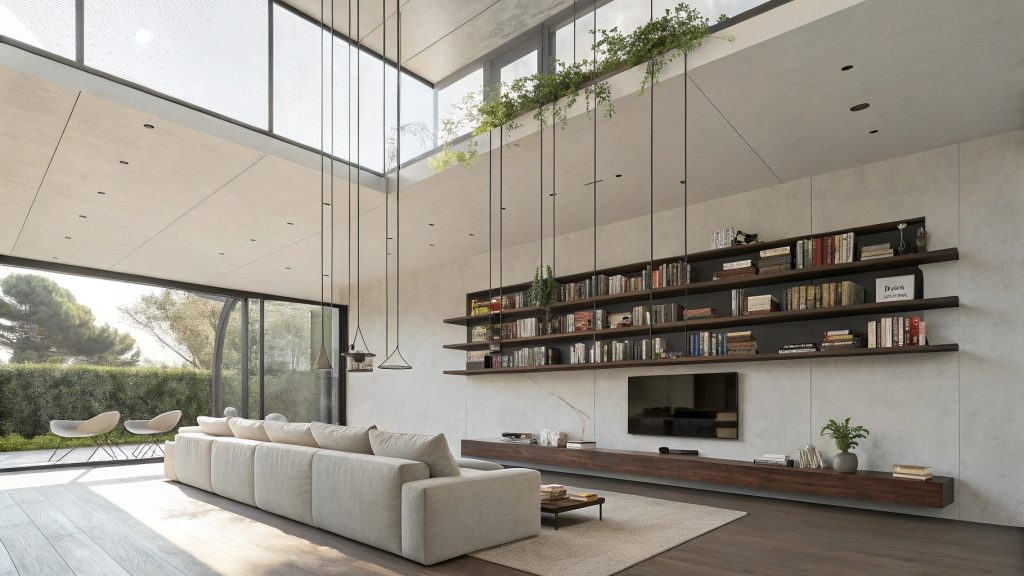
This idea utilizes the often-ignored space above a walkway or conversation area. Thin, elegant metal or wooden shelves are suspended from the ceiling by barely-there cables, creating a dramatic, chandelier-like effect.
The books appear to float in the air, creating a striking focal point that draws the eye upward. This is an excellent solution for rooms with high ceilings, adding visual interest without cluttering the floor space.
Key Features:
- Design: Shelves made of a single piece of wood or metal suspended from the ceiling by thin, strong tension cables.
- DIY Tip: Requires careful planning and secure installation into ceiling joists; use high-quality cables and hardware.
- Space Efficiency: Utilizes vertical space, leaving floor space open and uncluttered.
- Organization: Organize books by size or color to enhance the floating, artistic effect.
- Versatility: Shelves can be arranged at varying heights and lengths to create a multi-level, cascading display. Add integrated LED strips to the bottom of the shelves to illuminate the space below.
11. The Under-the-Staircase Book Nook

This design capitalizes on the often-wasted space beneath a staircase, transforming it into a cozy, built-in book nook.
The shelves can follow the ascending angle of the stairs, creating a unique, tiered display. This is a practical and enchanting way to utilize an awkward corner, turning it into an inviting reading spot with its own sense of private enclosure.
Key Features:
- Design: Built-in shelving that follows the angle of the stairs, creating a nook-like reading area. Can include a small bench or seat.
- DIY Tip: Requires precise measurements and custom-built shelves to fit the sloped space. Consider adding a small cushion or bench with hidden storage.
- Space Efficiency: Maximizes the use of a typically underutilized space.
- Organization: The tiered shelves are perfect for organizing books by size, with taller books on the lower, wider shelves and smaller ones on top.
- Versatility: The design can be adapted to any staircase and can include a small desk or seating area.
12. The Recessed Wall Library

This idea involves creating a large, built-in shelving unit that is entirely recessed into a wall, making it flush with the surrounding surface.
This creates a clean, minimalist look, as if the wall itself is a library. The shelves can be backed with a contrasting color or material to make the books pop, and integrated, hidden lighting can be added to highlight the collection.
Key Features:
- Design: A floor-to-ceiling shelving unit built into the wall, with no visible frame or trim, creating a seamless, flush appearance.
- DIY Tip: This is a major renovation project that requires framing and drywall work. Hire a professional to ensure a flawless finish.
- Space Efficiency: A highly efficient use of wall space without creating a bulky, protruding object in the room.
- Organization: The flush design allows for a very neat and orderly display of books.
- Versatility: The size and depth of the recessed library can be customized to fit any wall and collection size. Consider adding a sliding ladder for high shelves.
13. The Book-lined Coffee Table

This design transforms a functional coffee table into a display for your favorite books. The table’s base or top can be made of clear acrylic, allowing you to see a curated collection of books arranged inside.
This is a great way to display beautiful art books or special editions, turning a piece of furniture into a revolving gallery.
Key Features:
- Design: A coffee table with a transparent top and a built-in, visible cavity for storing books. Can be a solid piece or have a removable top.
- DIY Tip: Build a sturdy wooden base with a lip to hold the books, then add a custom-cut, tempered glass or thick acrylic top.
- Space Efficiency: Combines two functions into one, saving floor space while providing a unique display area.
- Organization: Arrange books neatly within the cavity, perhaps by color or size, to create a visually appealing “flat lay” effect.
- Versatility: Can be a simple, single-level design or a multi-level table with separate compartments for different items.
Idea 14: The Bookshelf as a Room Divider
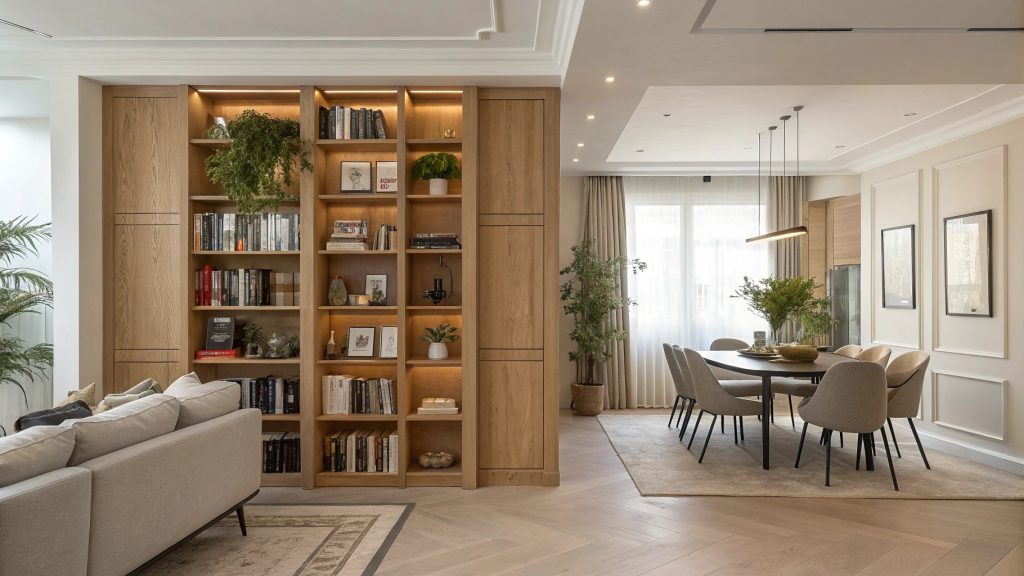
Instead of using a solid wall, a tall, open-backed bookshelf can be used to divide an open-plan room into two distinct areas.
This provides both storage and a semi-private partition, allowing light to pass through while creating a sense of separation. The shelves can be styled differently on each side, catering to the function of the adjacent space.
Key Features:
- Design: A tall, open-backed bookshelf placed in the middle of a room to serve as a divider.
- DIY Tip: Ensure the bookshelf is wide and heavy enough to be stable; use L-brackets to anchor it to the floor for added safety.
- Space Efficiency: Creates two distinct spaces without sacrificing light or a sense of openness.
- Organization: Arrange books and decorative items from both sides, creating a dynamic, two-faced display.
- Versatility: The size and style of the bookshelf can be customized to create a full or partial separation between spaces.
15. The Bedside Book Caddy

A simple, elegant solution for a small bedroom or for those who prefer to keep their reading material right by their side. This design features a slim, custom-built caddy that hangs from the side of the bed frame.
It has a few narrow slots for holding books upright, a small shelf for a reading light, and perhaps a spot for a cup of tea. It’s a minimalist, space-saving alternative to a traditional nightstand.
Key Features:
- Design: A slim, custom-built caddy that hooks over the side of the bed frame. Features slots for books, a small surface area for a lamp, and a cup holder.
- DIY Tip: Use high-quality wood or a sturdy composite material. Ensure the hook is strong enough to support the weight of the caddy and its contents.
- Space Efficiency: A perfect solution for small bedrooms where a nightstand would be too bulky.
- Organization: Keeps a few current reads and a light source right where you need them.
- Versatility: The caddy can be customized with different compartments and features to fit personal needs.
16. The Library Ladder with Built-in Shelves

This is not just a ladder for reaching high shelves; it’s a mobile storage unit in its own right. Each step of the ladder is a small, integrated shelf, allowing you to carry a stack of books with you as you move along a large wall of shelving.
It’s a clever fusion of functionality and style, turning a practical tool into a storage solution.
Key Features:
- Design: A rolling library ladder with bookshelves built into each step or riser.
- DIY Tip: Modify a standard library ladder by adding shallow, open-faced shelves to the risers of each step. Ensure the added weight is manageable.
- Space Efficiency: Combines a movable ladder with extra storage, maximizing the utility of a single piece of furniture.
- Organization: Use the ladder shelves to hold current reads, books you’re sorting, or a small decorative display.
- Versatility: The design can be adapted to any size or style of library ladder.
17. The Book Spine Art Wall

Instead of a traditional shelf, this idea uses books themselves as the decorative medium. The books are arranged spine-first in a frame or display box on the wall, creating a mosaic of color and texture.
The books can be arranged to create a specific image or pattern, turning your collection into a personalized work of art.
Key Features:
- Design: A large, shallow shadow box or frame mounted on the wall, where books are arranged spine-out to create a colorful pattern.
- DIY Tip: Build a shallow box with dividers to hold the books in place; use double-sided tape or a small amount of adhesive to secure them.
- Space Efficiency: A great way to use old or aesthetically pleasing books as decor without taking up shelf space.
- Organization: Curate your books by spine color, height, and thickness to create a beautiful, abstract design.
- Versatility: The size and shape of the frame can be customized to fit any wall space.
18. The Minimalist Book Sling

This is a simple, elegant solution that is both practical and visually light. A piece of stretched canvas or sturdy fabric is suspended from a thin frame, creating a sling for a few books.
It’s a perfect alternative to a nightstand or side table, holding only a few select books while adding a touch of softness to the room.
Key Features:
- Design: A simple frame with a taut fabric sling for holding books. Can be floor-standing or wall-mounted.
- DIY Tip: Build a small wooden or metal frame and stretch a piece of thick canvas or leather between the ends to create a sling.
- Space Efficiency: A great space-saving solution for small spaces or minimalist designs.
- Organization: Perfect for holding current reads or a small collection of magazines.
- Versatility: The size and color of the frame and fabric can be customized to match any decor.
1. Categorize by Purpose and Accessibility
The first step in organizing book storage is to sort your collection based on how often you use each type of book. Place frequently read novels, reference guides, or work-related materials at eye level or in easily accessible spots.
Seasonal reads, special editions, or decorative coffee table books can go on higher or lower shelves where they remain visible but not in the way. You can also create categories like fiction, non-fiction, cookbooks, or children’s stories to make locating them faster. This not only keeps your shelves neat but also adds a sense of order to your space. By prioritizing accessibility, you ensure your storage is not just stylish but practical for daily use.
2. Use Creative Layouts for Visual Balance
Instead of stacking all books vertically in a rigid manner, mix horizontal and vertical arrangements to give your storage an intentional and stylish look. Place a few books horizontally at the end of a row to act as natural bookends while also breaking the monotony. You can also leave small gaps for decorative items such as vases, candles, or plants, which add charm and personality.
Creating symmetry on both sides of a shelf helps establish balance, but don’t shy away from asymmetry if you want a modern touch. By thoughtfully blending books with décor, your storage doubles as both a functional library and a curated display. This method also prevents overcrowding and makes the setup visually lighter.
3. Maximize Space with Smart Storage Solutions
If your book collection is growing quickly, making use of hidden or overlooked spaces is key. Under-bed drawers, wall-mounted shelves, corner racks, or even ladder-style bookcases help you maximize every inch of your home. Baskets, bins, or labeled boxes can hold small paperbacks or magazines without looking messy.
Floating shelves above desks or doorways add extra storage without taking up floor space. If you prefer a minimalist look, closed cabinets with glass fronts keep your books dust-free yet stylishly displayed. For small rooms, multifunctional furniture like storage ottomans or benches with built-in shelving works brilliantly. These solutions ensure your collection expands without cluttering your living space.


