
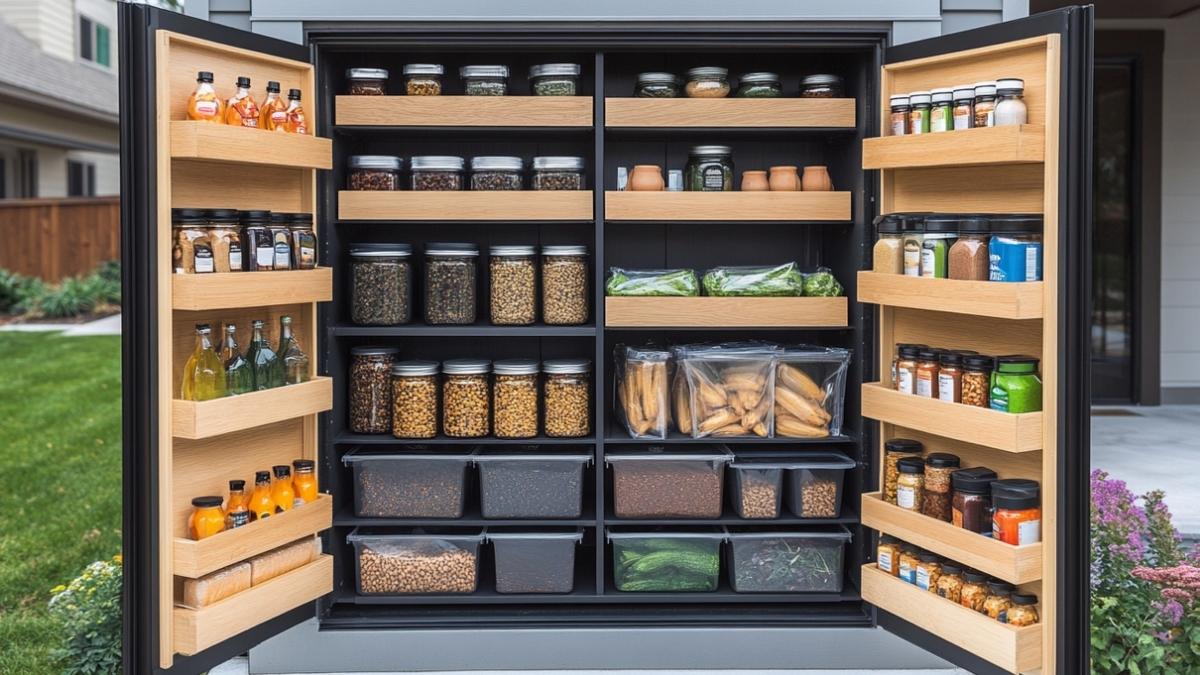
20 Food Storage Room Ideas for an Organized Pantry
Transform your chaotic pantry into a masterpiece of organization and efficiency with these revolutionary food storage solutions that go far beyond traditional shelving.
Whether you’re battling limited space, struggling with expired ingredients hiding in dark corners, or simply dreaming of a more beautiful and functional storage system, these innovative ideas will revolutionize how you think about food organization.
From high-tech smart inventory systems to rustic root cellar charm, each concept combines practical functionality with stunning aesthetics. These aren’t just storage solutions—they’re lifestyle upgrades that will save you time, reduce food waste, and make cooking preparation a genuine pleasure rather than a frustrating treasure hunt.
Save this Post for Later! ⬇

1. The Climate-Controlled Aging Chamber

Picture walking into what feels like a sophisticated wine cellar, but instead of bottles, you’re greeted by wheels of cheese, cured meats, and fermented vegetables aging to perfection. This isn’t just storage—it’s food artistry in action. The controlled humidity and temperature create microclimates within your home, allowing you to age your own charcuterie and develop complex flavors that rival gourmet establishments.
The beauty lies in the marriage of function and theater; copper piping snakes along cedar walls, while digital monitors display precise environmental readings. Visitors become mesmerized watching the slow transformation of simple ingredients into culinary treasures. Each shelf tells a story of patience and craft, with handwritten dates marking the journey from preparation to perfection.
What sets this concept apart is the integration of ancient preservation techniques with modern technology. Smart sensors automatically adjust conditions based on what you’re aging, while app notifications alert you when items reach peak flavor. This transforms food storage from a mundane necessity into an engaging hobby that connects you with centuries-old traditions while embracing cutting-edge innovation.
Key Features:
- Design: Cedar-lined walls with copper temperature control pipes and glass viewing panels
- DIY Tip: Start with a wine refrigerator and modify humidity controls using aquarium equipment
- Space Efficiency: Vertical aging racks maximize capacity while maintaining proper air circulation
- Organization: Color-coded tags indicate aging stages and optimal consumption dates
- Technology: Smart environmental controls with smartphone monitoring and alerts
2. The Rotating Carousel Pantry System

Forget everything you know about static storage—this ingenious system brings a carnival’s magic into your kitchen through a series of interconnected rotating cylinders that maximize every cubic inch of space. When you need something from the back, simply press a button and watch as the entire system gracefully rotates, bringing hidden treasures to the front like a slow-motion Ferris wheel of flavors.
The engineering marvel uses smooth-running tracks and whisper-quiet motors to create an almost meditative experience as shelves glide past. Each cylinder can be programmed to stop at specific intervals, creating designated zones for different food categories. The hypnotic rotation becomes a conversation starter, transforming routine ingredient gathering into an engaging ritual that guests remember long after leaving.
Beyond its entertainment value, this system solves the age-old problem of “lost” items lurking in pantry depths. Everything remains visible and accessible, while the rotating motion naturally prevents items from settling into forgotten corners. The space-saving design fits into narrow rooms that traditional shelving would overwhelm, making it perfect for urban kitchens where every square foot counts.
Key Features:
- Design: Multiple rotating cylindrical storage units with adjustable shelving heights
- DIY Tip: Retrofit lazy Susan hardware into custom cylindrical frames for budget-friendly version
- Space Efficiency: 360-degree access eliminates dead space and doubles storage capacity
- Organization: Color-coded sections rotate independently for category-based organization
- Innovation: Programmable stops ensure frequently used items always rotate to the front
3. The Living Wall Preservation Garden

Transform one wall into a breathing, growing ecosystem where fresh herbs cascade from ceiling to floor while preserved foods rest in climate-controlled alcoves carved between the greenery. This vertical garden concept merges hydroponic growing with intelligent storage, creating a living pantry that produces fresh ingredients while preserving others in optimal conditions.
Imagine reaching for dried beans from a sleek compartment, then snipping fresh basil growing just inches away. The system integrates seamlessly, with humidity from the growing plants helping maintain optimal conditions for certain stored goods. LED grow lights double as ambient room lighting, creating a warm, Instagram-worthy glow that makes the space feel more like a high-end restaurant than a storage room.
The genius lies in understanding that different foods require different environments—and plants can help create those microclimates naturally. Herbs release beneficial compounds that can help preserve nearby stored items, while their oxygen production improves air quality throughout the space. This isn’t just storage; it’s a small-scale ecosystem that works harder and smarter than traditional static shelving.
Key Features:
- Design: Vertical hydroponic growing system integrated with climate-controlled storage alcoves
- DIY Tip: Use PVC pipes for hydroponic channels and install between traditional shelving units
- Space Efficiency: Maximizes vertical space while producing fresh ingredients on-demand
- Organization: Growing herbs labeled with harvest dates alongside preserved goods with expiration tracking
- Sustainability: Plants help regulate humidity and air quality while reducing grocery shopping needs
4. The Hidden Floor Vault Network

Beneath your feet lies a network of hidden compartments that would make any secret agent envious—floor panels that lift to reveal temperature-controlled chambers perfect for root vegetables, wines, and emergency supplies. This underground approach to storage takes inspiration from traditional root cellars but reimagines them with modern convenience and stealth technology.
The beauty of subfloor storage is its invisibility; your room maintains a clean, minimalist aesthetic while hiding extensive storage capacity below. Pressure-sensitive panels open with a gentle foot tap, revealing organized compartments lined with different materials optimized for specific food types. Cedar for dry goods, stainless steel for perishables, and terracotta for items that benefit from moisture regulation.
What makes this concept revolutionary is its use of the earth’s natural cooling properties combined with modern insulation techniques. Items stored below ground level maintain more stable temperatures year-round, reducing energy costs while extending shelf life. The system can be gradually expanded by adding more floor compartments, making it perfect for growing families or evolving storage needs.
Key Features:
- Design: Flush floor panels that lift to reveal insulated underground storage compartments
- DIY Tip: Start with one section and use foam board insulation with weatherstripping for sealing
- Space Efficiency: Utilizes unused subfloor area without impacting room layout or traffic flow
- Organization: Different compartment linings optimized for various food storage requirements
- Security: Hidden storage provides emergency food reserves invisible to casual observers
5. The Pulley-Powered Ceiling System

Suspend disbelief as your storage literally rises to new heights with an intricate pulley system that transforms your ceiling into prime real estate for food storage. Heavy items like bulk grains and canned goods hover overhead in beautifully crafted wooden crates, lowering smoothly to counter height with a gentle pull of nautical-grade rope.
This system draws inspiration from old-fashioned general stores and ship galleys, where space efficiency was literally a matter of survival. The rhythmic motion of raising and lowering creates an almost therapeutic routine, while the visual drama of suspended storage turns everyday organization into performance art. Each crate can be individually accessed without disturbing others, maintaining the convenience of traditional shelving.
The unexpected benefit is how this system naturally encourages inventory rotation—items stored overhead are used less frequently, making them perfect for bulk purchases and seasonal ingredients. The physical effort required to access ceiling storage creates a natural barrier against impulse consumption while keeping emergency reserves readily available when truly needed.
Key Features:
- Design: Wooden crates suspended from ceiling-mounted pulley systems with nautical rope
- DIY Tip: Use boat winches and marine-grade hardware for smooth operation and longevity
- Space Efficiency: Transforms unused ceiling height into accessible storage without floor footprint
- Organization: Different crate sizes accommodate various bulk items with easy individual access
- Exercise: Natural portion control through mild physical effort encourages mindful consumptio
6. The Modular Cube Universe

Envision a three-dimensional puzzle where each piece serves a purpose—interlocking storage cubes that can be reconfigured, stacked, and rearranged based on your changing needs and seasonal preferences. These aren’t just boxes; they’re building blocks for an ever-evolving storage ecosystem that grows and adapts like living architecture.
Each cube features its own microenvironment, with some refrigerated, others dehydrated, and still others maintaining humidity for specific items. The modular nature means you can start small and expand systematically, adding cubes as your storage needs grow or your culinary interests evolve. Magnetic connections ensure stability while allowing for tool-free reconfiguration whenever inspiration strikes.
The psychological impact of this system is profound—instead of feeling constrained by fixed shelving, you become the architect of your own storage solution. Seasonal reorganization becomes an engaging puzzle rather than a chore, while the clean, geometric aesthetic creates a sense of order that extends beyond mere organization into the realm of spatial meditation.
Key Features:
- Design: Interlocking cubic storage units with magnetic connections and varied internal climates
- DIY Tip: Build basic cubes from plywood and add rare earth magnets for connection points
- Space Efficiency: Infinite configuration possibilities adapt to any room shape or size requirement
- Organization: Color-coded cube systems allow for intuitive category-based arrangement
- Flexibility: Add, remove, or rearrange storage capacity based on seasonal needs and lifestyle changes
7. The Apothecary’s Dream Laboratory

Step into a space where food storage meets pharmaceutical precision—wall-to-wall glass containers in varying sizes create a visual symphony of textures, colors, and ingredients that would make any Victorian apothecary weep with envy. Each jar is precisely labeled with both common and scientific names, turning your pantry into an educational experience that celebrates the chemistry of cooking.
The systematic approach to organization reveals patterns and relationships between ingredients that casual storage obscures. Spices are grouped by botanical families, grains by nutritional profiles, and preserved items by preparation methods. This scientific approach not only looks spectacular but actually improves cooking intuition by making ingredient relationships visible and memorable.
LED backlighting transforms the glass containers into luminous displays that shift in color temperature throughout the day, from cool morning light to warm evening ambiance. The laboratory aesthetic encourages experimentation and precision, turning meal preparation into a more mindful, scientific endeavor where measurements matter and combinations are deliberate rather than accidental.
Key Features:
- Design: Floor-to-ceiling glass containers with precise labeling and LED backlighting systems
- DIY Tip: Use uniform mason jars with printed labels and battery-powered LED strips for affordable luxury
- Space Efficiency: Airtight glass storage extends shelf life while maximizing vertical display space
- Organization: Scientific categorization system reveals ingredient relationships and cooking possibilities
- Education: Detailed labeling with botanical names and nutritional information enhances culinary knowledge
8. The Industrial Pipeline Cathedral

Transform utilitarian into extraordinary with an exposed pipeline system that celebrates industrial aesthetics while delivering unparalleled functionality—black iron pipes create the skeleton for a storage system that looks like it belongs in a craft brewery or artisanal factory. The raw, unfinished aesthetic makes a bold statement that storage can be both beautiful and brutally efficient.
The pipeline framework supports everything from hanging mesh baskets to sliding storage containers, creating a flexible system that can be modified with simple pipe fittings and universal connections. The industrial materials are inherently durable and easy to clean, while the modular nature means you can expand or reconfigure the system using standard plumbing supplies from any hardware store.
What elevates this concept is how the exposed infrastructure becomes part of the room’s architecture rather than hiding behind walls. The honest expression of function creates an authentic, workshop-like atmosphere that makes food preparation feel more connected to craft traditions. The visual weight of the black iron provides dramatic contrast against whatever contents you choose to display.
Key Features:
- Design: Black iron pipe framework with hanging storage baskets and sliding container systems
- DIY Tip: Use standard plumbing pipes and fittings to create custom configurations at fraction of custom cost
- Space Efficiency: Vertical pipe structure maximizes storage while maintaining open floor space
- Organization: Universal mounting systems accommodate various container types and sizes
- Durability: Industrial materials withstand heavy use and are easily maintained or modified
9. The Sliding Barn Door Revelation

Behind what appears to be a rustic barn door lies a storage wonderland that maximizes every square inch through clever use of the door itself as additional storage real estate. The back of the door features shallow shelving perfect for spices and frequently used items, while the revealed space beyond showcases deeper storage for bulk goods and seasonal items.
The barn door’s natural insulation properties help maintain consistent temperatures in the storage area, while its wide opening provides unobstructed access to the entire space. The rustic aesthetic brings warmth and character to what could otherwise be a purely functional room, creating a space that feels intentional and inviting rather than utilitarian and cold.
The psychology of the hidden reveal creates daily moments of satisfaction—sliding open the door to access your organized stores feels like unveiling a treasure trove. This emotional connection to your storage space encourages better organization and more thoughtful consumption patterns, as the ritual of opening becomes a mindful moment in daily routines.
Key Features:
- Design: Reclaimed wood barn door with integrated back-panel storage and smooth sliding hardware
- DIY Tip: Convert existing doors by adding shallow shelving brackets and installing barn door track systems
- Space Efficiency: Door-back storage doubles available space while maintaining full room access
- Organization: Dual-zone system with frequent-use items on door and bulk storage in main room
- Aesthetics: Rustic barn door adds character while concealing utilitarian storage space
10. The Under-Stair Wine & Provisions Cellar

Discover the hidden potential beneath your staircase by creating a sophisticated storage cellar that maximizes the naturally sloped space with custom-angled shelving designed to perfectly fit wine bottles, preserve jars, and specialty items. The under-stair location provides natural insulation and temperature stability while transforming dead space into a focal point of sophisticated organization.
The sloped ceiling creates natural zones for different storage needs—taller items fit in the deeper sections while smaller bottles and jars nestle perfectly in the lower areas. Dramatic lighting emphasizes the architectural angles, creating shadows and highlights that make the space feel larger and more dynamic than its actual square footage.
The intimacy of the enclosed space creates a cave-like atmosphere that’s perfect for items that benefit from consistent temperatures and minimal light exposure. The challenge of fitting storage into an unusual space becomes an opportunity for creative problem-solving that results in a completely unique and highly efficient use of typically wasted square footage.
Key Features:
- Design: Custom angled shelving following stair slope with integrated wine racks and preserve storage
- DIY Tip: Use stair stringers as templates for cutting shelves that follow the natural angles perfectly
- Space Efficiency: Transforms typically unused under-stair area into maximum storage capacity
- Organization: Natural zones created by varying ceiling heights accommodate different item sizes
- Ambiance: Enclosed cave-like environment provides optimal conditions for wine and preserve storage
11. The Temperature-Zoned Sanctuary

Imagine a single room divided into invisible climate zones, each maintaining perfect conditions for different food categories through strategic placement of heating, cooling, and humidity controls. Root vegetables thrive in cool, humid earth-toned sections while dried goods stay crisp in warm, dry zones marked by different lighting and materials.
The zoning is achieved through careful placement of small climate control units, thermal barriers disguised as decorative elements, and strategic air circulation patterns that maintain distinct microclimates within the shared space. Color-coded lighting helps users intuitively understand which zones are best for different foods, while clear sight lines allow monitoring of all areas simultaneously.
This approach revolutionizes food storage by recognizing that different foods have vastly different optimal storage conditions. Instead of forcing everything into one environment, the zoned system allows each food type to exist in its preferred microclimate, extending shelf life and maintaining quality in ways that traditional single-environment storage simply cannot match.
Key Features:
- Design: Multiple climate zones within single room using discrete environmental controls and thermal barriers
- DIY Tip: Create zones using small dehumidifiers, space heaters, and insulated dividers for targeted climate control
- Space Efficiency: Maximizes food preservation quality without requiring separate rooms for different storage needs
- Organization: Color-coded lighting and materials help users intuitively place items in optimal zones
- Science: Evidence-based storage conditions extend shelf life and maintain nutritional value
12. The Magnetic Spice Galaxy

Transform a metal wall into a constellation of flavors where magnetic containers float in organized patterns, creating a spice storage system that’s equal parts functional art and culinary convenience. Each container can be repositioned instantly, allowing for seasonal reorganization or creative arrangements that reflect your cooking mood and menu planning.
The magnetic system eliminates the frustration of digging through spice cabinets by making every container immediately visible and accessible. The metallic background creates stunning visual contrast while serving as a giant magnetic surface that can accommodate dozens of containers without requiring any permanent mounting hardware or shelf installation.
The three-dimensional arrangement possibilities are endless—cluster related spices into galaxy formations, create linear arrangements by cuisine type, or develop your own artistic patterns that make the wall a focal point of the room. The flexibility encourages experimentation with both organization systems and actual spice combinations as visual relationships inspire culinary creativity.
Key Features:
- Design: Metal wall surface with magnetic spice containers arranged in artistic, functional patterns
- DIY Tip: Use magnetic sheet material and uniform containers with strong magnets for affordable flexibility
- Space Efficiency: Vertical magnetic storage eliminates need for traditional spice racks or cabinet space
- Organization: Infinite rearrangement possibilities allow for seasonal, cuisine-based, or frequency-based organization
- Accessibility: All containers remain visible and reachable without moving other items
13. The Pull-Out Drawer Tower System
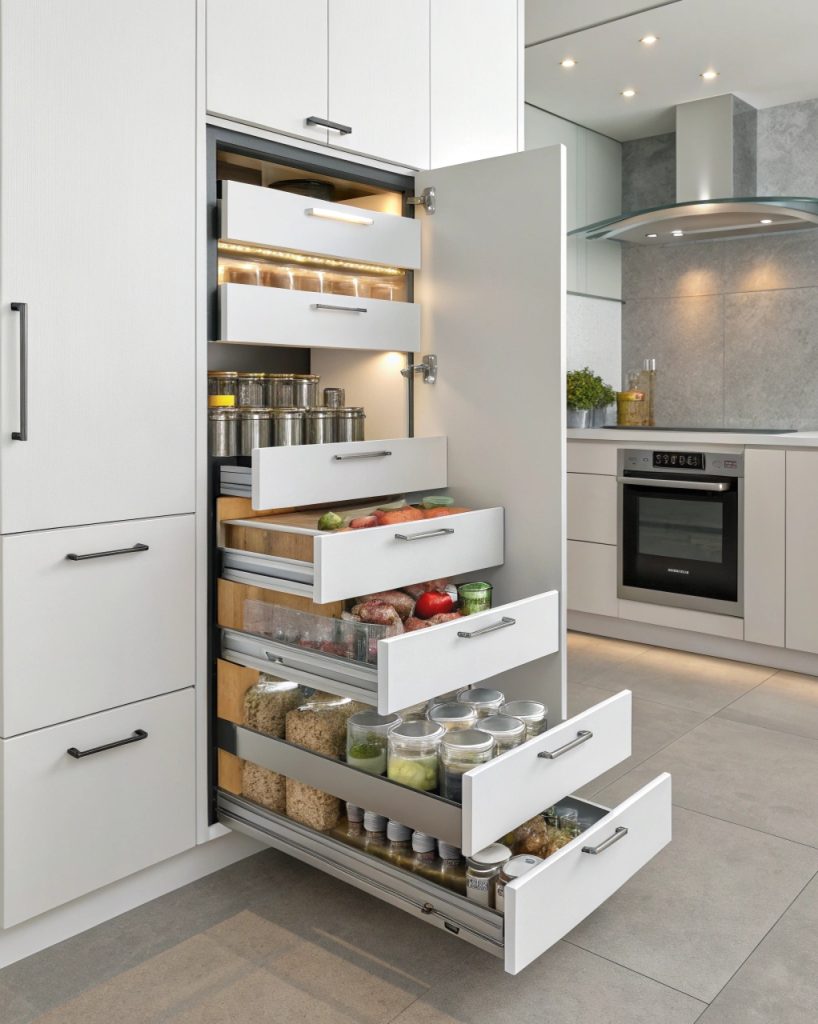
Revolutionize vertical storage with a tower of custom-depth drawers that extend completely for full visibility and access to contents, eliminating the black hole effect of traditional deep shelving. Each drawer operates independently with smooth, full-extension slides that allow you to see and reach everything without disturbing other levels.
The genius lies in varying drawer depths based on typical storage needs—shallow drawers for spices and small items, medium depths for canned goods, and deep drawers for bulk packages and appliances. Soft-close mechanisms ensure quiet operation while preventing damage from slam-shut accidents, and the drawer fronts can be customized to match any aesthetic from modern minimalist to traditional farmhouse.
The pull-out action transforms the entire storage experience from reaching and straining to simply sliding and selecting. The psychological impact of seeing everything at once reduces food waste, improves inventory awareness, and makes cooking preparation more efficient and enjoyable as ingredients reveal themselves systematically rather than hiding in pantry depths.
Key Features:
- Design: Tower of varied-depth pull-out drawers with full-extension slides and soft-close mechanisms
- DIY Tip: Retrofit existing shelving with drawer slides and custom-built drawer boxes for immediate upgrade
- Space Efficiency: Complete extension provides 100% access to drawer contents without wasted back space
- Organization: Graduated drawer depths accommodate different food categories and package sizes perfectly
- Ergonomics: Eliminates reaching, bending, and stretching while providing complete inventory visibility
14. The Corner Carousel Revolution

Maximize the notoriously difficult corner space with a multi-level rotating system that brings the convenience of a lazy Susan to vertical storage, creating a cylindrical storage solution that puts every square inch of corner real estate to productive use. The rotating action ensures that nothing gets permanently lost in the back corner void.
Multiple levels rotate independently, allowing you to access specific shelves without disturbing others, while the curved shelving design maximizes capacity within the circular footprint. The smooth rotation creates an almost meditative experience as you gently spin each level to find exactly what you need, transforming corner frustration into corner satisfaction.
The visual impact of the curved shelving creates interesting sight lines and architectural interest in what’s typically the most awkward space in any room. The cylindrical form becomes a sculptural element that anchors the corner while providing storage density that exceeds traditional corner solutions by utilizing the full height potential of the vertical space.
Key Features:
- Design: Multi-level independent rotating circular shelving system custom-fitted to corner dimensions
- DIY Tip: Stack multiple lazy Susan turntables and build curved shelving using flexible plywood strips
- Space Efficiency: Utilizes complete corner volume including typically wasted triangular back spaces
- Organization: Independent level rotation allows access to specific shelves without disturbing entire system
- Innovation: Transforms problematic corner space into highest-efficiency storage area
15. The Vacuum-Sealed Preservation Chambers

Enter the future of food storage with individual sealed chambers that maintain perfect atmospheric conditions for different food categories through controlled vacuum environments that dramatically extend shelf life while preserving nutritional value and flavor intensity. Each chamber is independently controlled and monitored through digital displays.
The clear acrylic construction allows constant visual monitoring of stored items while maintaining airtight seals that prevent contamination and oxidation. The futuristic aesthetic creates a laboratory-like environment that elevates food storage from mundane necessity to high-tech preservation science, making the space feel more like a research facility than a traditional pantry.
The technology addresses the fundamental causes of food spoilage by removing oxygen, controlling humidity, and maintaining optimal temperatures for specific food types. This scientific approach to preservation reduces food waste, saves money, and allows for bulk purchasing without concern about spoilage, revolutionizing the economics of food storage for modern families.
Key Features:
- Design: Clear acrylic chambers with individual vacuum pumps and digital atmospheric monitoring systems
- DIY Tip: Start with vacuum storage bags inside clear containers with manual pumps for budget version
- Space Efficiency: Compact chamber design stores more food in less space through optimized atmospheric conditions
- Organization: Separate chambers for different food categories maintain optimal preservation conditions
- Technology: Digital monitoring displays show vacuum levels, humidity, and temperature for each chamber
16. The Smart Inventory Tracking Hub

Transform your storage room into an intelligent system that knows exactly what you have, when you bought it, and when it expires through integrated RFID tracking, barcode scanning, and smart shelving that automatically updates your inventory as items are added or removed. Digital displays throughout the room show real-time stock levels and suggested shopping lists.
The system learns your consumption patterns and suggests optimal purchasing quantities to minimize waste while ensuring you never run out of essential items. Smart alerts notify you of approaching expiration dates, while recipe suggestions help you use items before they spoil. The technology turns food management from reactive to proactive.
The integration with smart home systems allows voice-activated inventory queries and automatic grocery list generation based on predetermined minimum stock levels. The space becomes a command center for household food management, reducing decision fatigue while optimizing nutrition, budget, and time efficiency through data-driven insights.
Key Features:
- Design: Smart shelving with integrated RFID readers, digital displays, and automatic inventory tracking systems
- DIY Tip: Use smartphone apps with barcode scanning and manual inventory tracking for basic smart system
- Space Efficiency: Optimizes purchasing decisions to maintain ideal stock levels without over-storing
- Organization: Automated categorization and location tracking eliminates time spent searching for items
- Technology: Integration with smart home systems enables voice control and automatic grocery list generation
17. The Rustic Root Cellar Time Machine

Step back in time with a storage space that celebrates traditional preservation methods through stone walls, wooden shelving, and earth-friendly materials that naturally regulate temperature and humidity without electricity. The aesthetic pays homage to pre-industrial food storage while incorporating modern understanding of food science.
The natural materials create microclimates that benefit different foods—stone walls provide thermal mass that moderates temperature swings, wooden shelves allow air circulation, and earth floors maintain consistent humidity levels. The traditional methods prove their effectiveness through centuries of use while offering sustainability benefits that modern convenience often overlooks.00
The space connects users to food traditions and seasonal rhythms that industrial storage methods have obscured. The ritual of checking and rotating stored goods becomes a meditation on abundance, preparation, and the natural cycles that sustain life, creating emotional satisfaction that transcends mere convenience and efficiency.
Key Features:
- Design: Stone walls, wooden shelving, earth floors, and traditional preservation methods in authentic root cellar style
- DIY Tip: Use reclaimed materials and natural lime mortar to create authentic textures and temperature regulation
- Space Efficiency: Natural climate control eliminates energy costs while maintaining optimal storage conditions
- Organization: Traditional preservation methods grouped by technique (dried, canned, fermented, fresh storage)
- Sustainability: Zero-energy operation using natural materials and time-tested preservation principles
18. The Minimalist Pod Collection

Embrace the philosophy that less is more with sleek, sealed storage pods that float in clean white space, each pod perfectly sized and environmentally optimized for specific food categories. The minimalist aesthetic eliminates visual clutter while maximizing storage efficiency through careful curation and precise organization.
Each pod represents thoughtful consideration of what truly deserves space in your life, encouraging mindful consumption and quality over quantity. The uniform pod design creates visual harmony while the varied contents add subtle color and texture interest without overwhelming the serene atmosphere of curated abundance.
The psychological impact of the minimal environment promotes clarity and intention in food choices while the pod system makes inventory instantly visible and accessible. The space becomes a meditation on abundance through restraint, proving that thoughtful limitation creates more satisfaction than overwhelming excess.
Key Features:
- Design: Uniform sealed storage pods in clean white environment with precise geometric organization
- DIY Tip: Use matching containers with airtight seals in consistent sizes for cohesive minimalist appearance
- Space Efficiency: Curated selection eliminates excess while optimizing storage for frequently used quality items
- Organization: Pod system encourages intentional choices and prevents accumulation of unnecessary items
- Psychology: Minimalist aesthetic promotes mindful consumption and appreciation for quality over quantity
19. The Vintage Pharmacy Cabinet Museum

Create a storage wonderland inspired by early 20th-century pharmacy cabinets with hundreds of small drawers, each perfectly sized for different ingredients and labeled with vintage apothecary-style typography. The cabinet system transforms food storage into a treasure hunt where each drawer holds specific ingredients organized by botanical families, culinary traditions, or preparation methods.
The small drawer format encourages portion control and prevents bulk buying of items that might spoil, while the extensive labeling system creates educational opportunities about ingredient origins, uses, and relationships. The vintage aesthetic brings warmth and character to utilitarian storage while the precise organization satisfies those who love detailed categorization systems.
The drawer system provides unparalleled protection for delicate items like spices and herbs while creating an immersive experience that makes cooking preparation feel more like an expedition through a well-curated collection than a mundane chore. Each drawer opening reveals new possibilities and inspiration for culinary creativity.
Key Features:
- Design: Antique-style cabinet system with numerous small drawers featuring vintage labels and brass hardware
- DIY Tip: Repurpose vintage card catalog cabinets or build custom drawer systems using traditional joinery methods
- Space Efficiency: Hundreds of small drawers maximize storage density while providing perfect portion-sized access
- Organization: Detailed categorization system with educational labeling enhances culinary knowledge
- Character: Vintage aesthetic transforms utilitarian storage into museum-quality display of culinary ingredients
20. The Multi-Level Platform Ecosystem

Revolutionize storage through a series of connected platforms at varying heights that create distinct storage neighborhoods within a single room, with ramps and stairs connecting different levels like a sophisticated warehouse designed for easy navigation and maximum efficiency. Each platform specializes in different storage types based on access frequency and environmental needs.
The multi-level approach creates natural organization zones while maximizing cubic storage volume in ways that traditional flat storage cannot achieve. The elevated platforms provide additional storage underneath while the varied heights create interesting architectural elements that make the space feel larger and more dynamic than its actual square footage.
The platform system encourages movement and exploration while maintaining logical organization patterns that make sense for different types of food storage. The three-dimensional approach to organization reflects how we actually think about and use our stored goods, creating intuitive navigation patterns that reduce time spent searching and increase satisfaction with the storage experience.
Key Features:
- Design: Connected platforms at multiple levels with ramps, stairs, and under-platform storage areas
- DIY Tip: Build simple platform systems using standard lumber and connect with removable ramp sections
- Space Efficiency: Maximizes cubic storage volume while creating distinct zones for different storage needs
- Organization: Natural separation of storage types based on platform height and accessibility requirements
- Architecture: Creates interesting spatial dynamics that make storage room feel larger and more engaging
How to Bring These Food Storage Ideas to Life
Phase 1: Assessment & Planning (Week 1-2)
Space Evaluation
Start by measuring your available space and identifying problem areas. Take photos from multiple angles and note:
- Dimensions (height, width, depth)
- Electrical access points
- Plumbing considerations
- Natural lighting sources
- Traffic flow patterns
- Existing structural elements you can work with
Inventory Analysis
Document what you actually store:
- List everything currently in your pantry/storage
- Note package sizes and quantities
- Identify items you buy in bulk vs. daily use
- Track your shopping patterns for 2-3 weeks
- Determine which foods need special storage conditions
Budget & Timeline Planning
- Set a realistic budget (range from $200 DIY to $5000+ professional)
- Decide between DIY, partial professional help, or full custom build
- Plan implementation in phases if budget is limited
- Consider which ideas can be tested temporarily before permanent installation
Phase 2: Choosing Your Approach (Week 3)
Match Ideas to Your Lifestyle
For Busy Families: Focus on accessibility and quick organization
- Pull-out drawer systems (#13)
- Smart inventory tracking (#16)
- Modular cube systems (#6)
For Cooking Enthusiasts: Emphasize ingredient variety and inspiration
- Apothecary laboratory style (#7)
- Magnetic spice galaxy (#12)
- Vintage pharmacy cabinets (#19)
For Small Spaces: Maximize every square inch
- Under-stair cellars (#10)
- Hidden floor vaults (#4)
- Pulley ceiling systems (#5)
For Tech-Forward Homes: Integrate with smart home systems
- Smart inventory tracking (#16)
- Climate-controlled aging chambers (#1)
- Vacuum-sealed preservation chambers (#15)
Hybrid Approach Strategy
Most successful implementations combine elements from multiple ideas:
- Start with one primary concept as your foundation
- Add 2-3 smaller elements from other ideas
- Plan for future expansion and modification
Phase 3: DIY Implementation Roadmap
Beginner-Friendly Starts (Under $500)
Magnetic Spice System:
- Purchase magnetic sheet material ($30-50)
- Buy uniform spice containers with magnets ($60-100)
- Install sheet on wall or inside cabinet door
- Transfer spices and create labeling system
- Arrange in patterns that work for your cooking style
Modular Cube Beginning:
- Start with 6-8 uniform storage cubes ($100-200)
- Add rare earth magnets for connections ($20-30)
- Experiment with arrangements
- Gradually add more cubes as budget allows
- Consider different cube types (ventilated, sealed, etc.)
Pull-Out Drawer Conversion:
- Measure existing shelving
- Purchase drawer slides and hardware ($150-300)
- Build simple drawer boxes from plywood ($100-150)
- Install slides following manufacturer instructions
- Add dividers and organizers
Intermediate Projects ($500-2000)
Climate-Controlled Zones:
- Research small climate control units
- Install separate temperature/humidity controls in different areas
- Use thermal barriers (insulated panels) between zones
- Add monitoring systems for each zone
- Test and adjust over several seasons
Rotating Carousel System:
- Purchase heavy-duty lazy Susan hardware
- Build cylindrical frame using curved plywood techniques
- Install motor system for automated rotation (optional)
- Add adjustable shelving within cylinder
- Wire electrical for lighting and controls
Under-Stair Conversion:
- Clear and clean under-stair space
- Add insulation and moisture barrier
- Install custom angled shelving following stair slope
- Add lighting system
- Install ventilation if needed
Advanced Projects ($2000+)
Smart Inventory System:
- Choose technology platform (RFID, barcode, or hybrid)
- Install smart shelving with sensors
- Set up central control system
- Configure smartphone app integration
- Train family members on system use
Hidden Floor Vault Network:
- Plan locations that won’t interfere with utilities
- Cut floor sections carefully
- Excavate and prepare underground chambers
- Install insulation and sealing systems
- Add access mechanisms and safety features
Phase 4: Professional Integration Options
When to Call Professionals
- Electrical work for smart systems or specialized lighting
- Plumbing modifications for humidity control
- Structural changes for floor vaults or ceiling systems
- Custom cabinetry for complex drawer systems
- HVAC modifications for climate zones
Working with Contractors
- Show them photos and detailed plans
- Get quotes from multiple specialists
- Ensure they understand food storage requirements
- Plan for future modifications and access
- Request warranties on all custom work
Phase 5: Testing & Refinement (Months 2-6)
Start Small, Scale Up
- Implement one section at a time
- Live with each change for 2-4 weeks before adding more
- Document what works and what doesn’t
- Adjust organization patterns based on actual use
- Involve family members in testing and feedback
Common Adjustment Needs
- Shelf heights may need modification after real-world testing
- Access patterns often differ from initial assumptions
- Lighting may need adjustment for practical use
- Organization categories might need refinement
- Climate control settings require seasonal adjustment
Optimization Strategies
- Track which stored items you actually use
- Monitor expiration dates to validate preservation methods
- Adjust purchasing patterns based on new storage capabilities
- Refine organization systems based on cooking frequency
- Consider seasonal reorganization patterns
Phase 6: Maintenance & Evolution
Ongoing Care
- Clean and inspect systems quarterly
- Recalibrate climate controls seasonally
- Update smart system software regularly
- Replace worn hardware proactively
- Document maintenance schedules
Expansion Planning
- Keep detailed records of what works best
- Plan for changing family needs
- Budget for gradual improvements
- Consider resale value impact
- Maintain flexibility for future modifications
Budget-Conscious Implementation Strategy
Phase 1: Essential Function ($200-500)
Focus on basic organization and accessibility improvements that provide immediate impact.
Phase 2: Enhanced Efficiency ($500-1500)
Add climate control, better lighting, and specialized storage for different food types.
Phase 3: Advanced Features ($1500+)
Integrate technology, custom solutions, and aesthetic enhancements.
Money-Saving Tips
- Repurpose existing furniture and hardware
- Buy materials during sales and off-seasons
- Trade skills with neighbors for specialized work
- Start with temporary solutions to test concepts
- Invest in quality hardware that can be reused
The key to success is starting with careful planning, implementing gradually, and adapting based on real-world experience. Most successful food storage renovations evolve over 6-12 months rather than being completed all at once.