
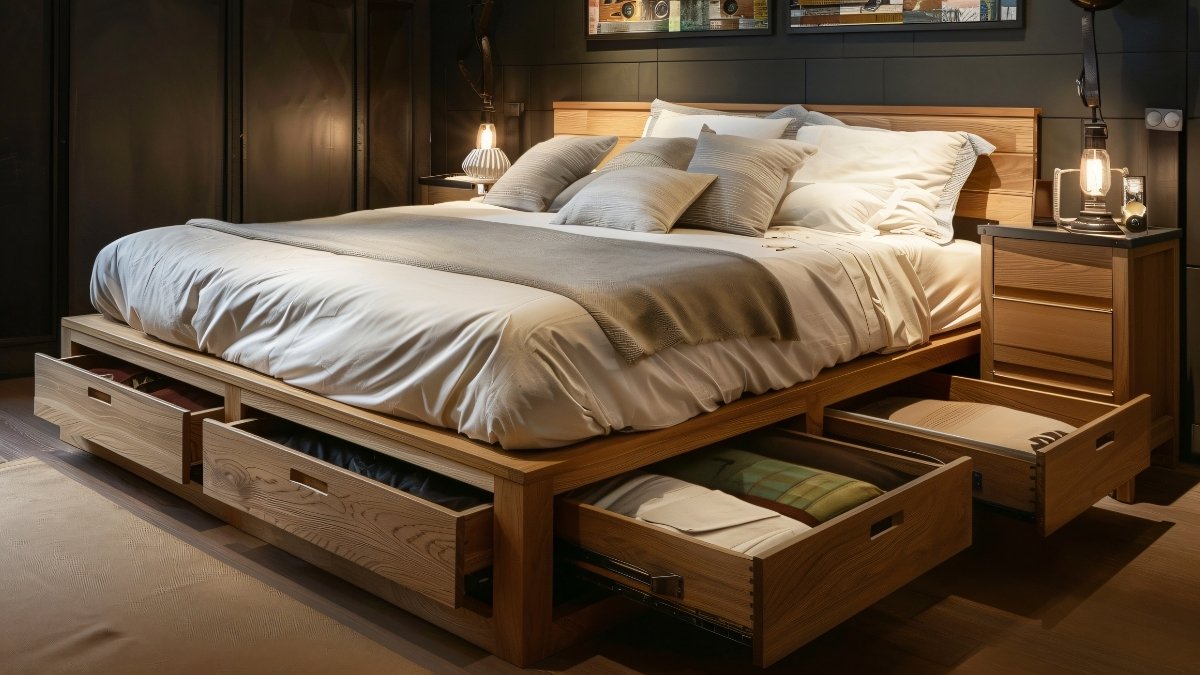
15 Bed Frames With Storage for Space-Saving Bedrooms
Storage bed frames have evolved from simple under-bed drawers into sophisticated space-maximizing solutions that address today’s urban living challenges.
With average apartment sizes shrinking by 30% over the past decade while possessions increase, these innovative furniture pieces combine sleeping comfort with extensive storage capacity, eliminating the need for separate dressers, closets, or storage units.
Modern designs integrate cutting-edge technologies including hydraulic lifts, motorized mechanisms, smart inventory systems, and modular configurations that transform bedrooms into highly efficient living spaces. From floating platforms with hidden compartments to rotating carousel systems and climate-controlled preservation units.
1. The Hydraulic Lift Platform Bed

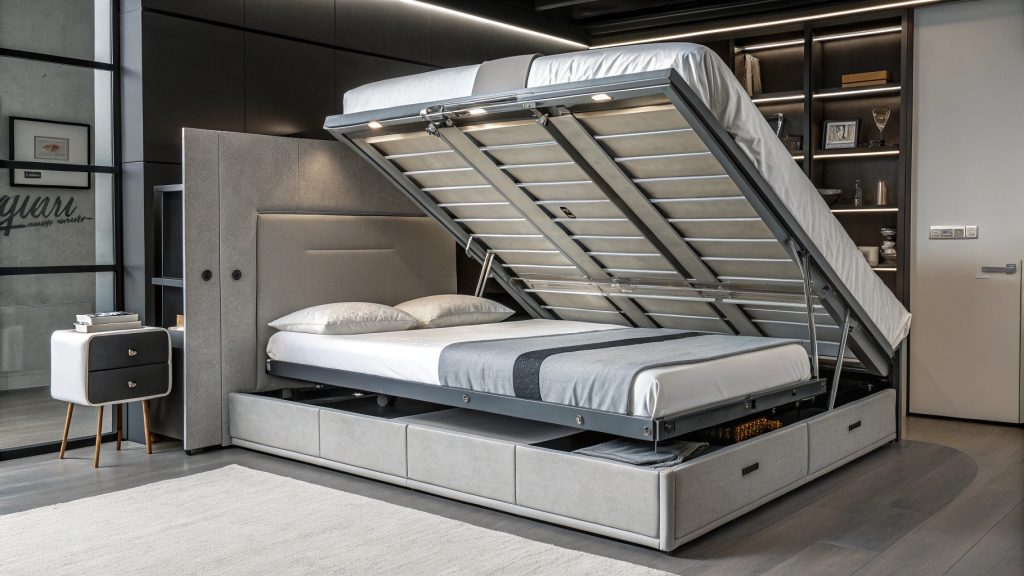
Imagine a bed that transforms your entire sleeping platform into a massive storage chest with the touch of a button. This revolutionary design uses gas-hydraulic pistons to effortlessly lift the entire mattress and platform, revealing a cavernous storage space underneath that could easily accommodate seasonal clothing, luggage, or even exercise equipment. The seamless operation makes accessing stored items as simple as opening a car trunk.
Key Features:
- Design: Hydraulic gas struts with soft-close mechanism, reinforced steel frame, and integrated LED lighting in the storage cavity with minimalist upholstered exterior.
- DIY Tip: Source gas struts from automotive suppliers and use piano hinges along the back edge; add safety cables to prevent over-lifting.
- Space Efficiency: Provides up to 20 cubic feet of storage while eliminating need for separate dressers or storage furniture.
- Organization: Full-width storage compartment can be subdivided with removable dividers and features integrated hanging rods.
- Versatility: Storage space adapts to bedding, out-of-season clothes, sports equipment, or can serve as a hidden safe room for valuables.
2. The Rotating Corner Storage Carousel Bed
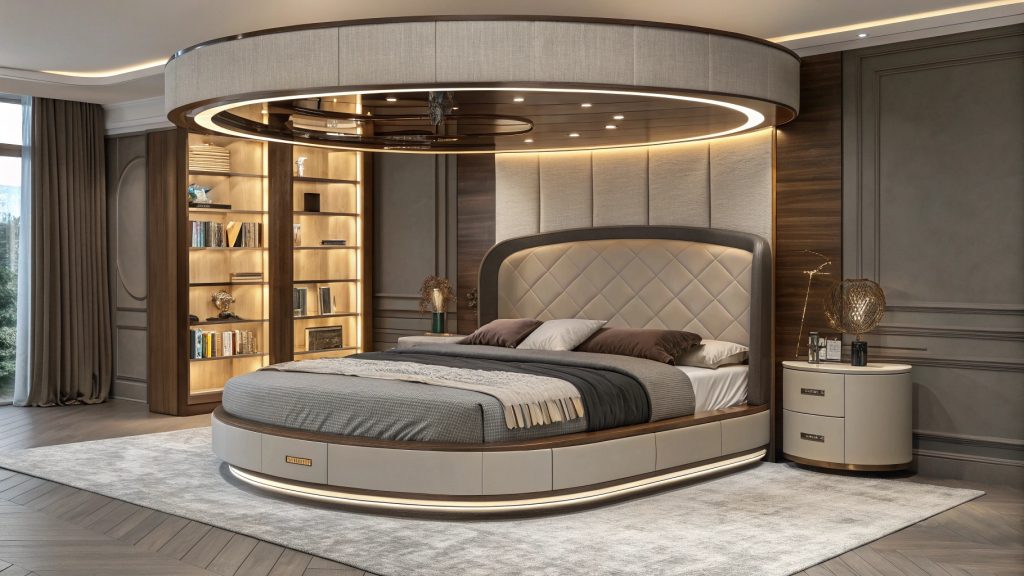
Transform dead corner space into a storage powerhouse with this ingenious circular bed design that features a rotating storage carousel built into the headboard area. The lazy-Susan mechanism allows access to items stored 360 degrees around the bed, creating a personal boutique experience where everything is within arm’s reach yet completely organized and hidden from view.
Key Features:
- Design: Circular headboard storage with 8-12 compartments on ball-bearing carousel system, motorized rotation option, and curved upholstered panels.
- DIY Tip: Repurpose a large lazy Susan bearing and build modular storage cubes that lock into position; add rubber dampeners for quiet operation.
- Space Efficiency: Utilizes typically wasted corner space while providing 360-degree accessible storage without requiring additional floor space.
- Organization: Segmented compartments can be designated for different categories with color-coded labeling and seasonal rotation schedules.
- Versatility: Compartments accommodate books, electronics, personal items, or decorative displays that can be rotated based on mood or season.
3. The Modular Tetris Storage System Bed

Revolutionary thinking meets playful design in this bed frame where the storage components can be rearranged like Tetris blocks. Each storage unit is a different geometric shape that interlocks with others, allowing you to completely reconfigure your storage layout based on changing needs, room layouts, or simply creative whims.
Key Features:
- Design: Interlocking geometric storage modules in various shapes (L, T, Z, square blocks) with magnetic or pin-lock connections and powder-coated steel frames.
- DIY Tip: Create modules using modular shelving systems with rare earth magnets embedded in connecting surfaces; use consistent mounting heights for flexibility.
- Space Efficiency: Maximizes storage density through puzzle-like fitting while allowing complete reconfiguration without tools or permanent installation.
- Organization: Different shaped modules can house specific item types, with clear acrylic fronts for easy identification and inventory management.
- Versatility: System adapts to room changes, growing collections, or lifestyle transitions by simply rearranging the modular components
4. The Murphy Bed with Flip-Down Desk Combo

When space is at an absolute premium, why choose between a bedroom and a home office? This ingenious design combines a Murphy bed mechanism with a flip-down desk that appears when the bed is stored vertically. The transformation is so seamless that guests would never guess your sophisticated home office conceals a comfortable bedroom.
Key Features:
- Design: Wall-mounted Murphy bed mechanism with integrated desk surface, built-in storage cubbies, cable management, and counterweight system for easy operation.
- DIY Tip: Use heavy-duty cabinet hinges and gas struts; ensure desk surface is properly counterbalanced and include safety locks in both positions.
- Space Efficiency: Converts between bedroom and office in under 60 seconds, effectively doubling the functional use of a single room.
- Organization: Desktop storage integrates with bed storage, featuring hidden compartments for office supplies and personal items with dual-access design.
- Versatility: Perfect for studio apartments, guest rooms that double as offices, or teenage bedrooms where study space is essential.
5. The Floating Cliff Edge Platform Bed

Defy gravity with this dramatic cantilevered bed design that appears to float in mid-air while concealing extensive storage within the supporting base structure. The visual impact is stunning – a floating platform that seems impossible yet provides extensive hidden storage accessible from multiple angles.
Key Features:
- Design: Cantilevered platform with hidden steel beam support, LED under-lighting for floating effect, and concealed storage compartments in base structure.
- DIY Tip: Anchor deep into wall studs with heavy steel brackets; use LED rope lighting for floating effect and ensure all structural connections are engineered.
- Space Efficiency: Dramatic visual impact while maximizing floor space underneath, with storage access from sides and front of base unit.
- Organization: Multiple access points allow categorized storage zones – front panels for daily items, side access for seasonal storage.
- Versatility: Design adapts to various room sizes and can incorporate additional floating elements like nightstands or shelving.
6. The Secret Compartment Bookshelf Bed
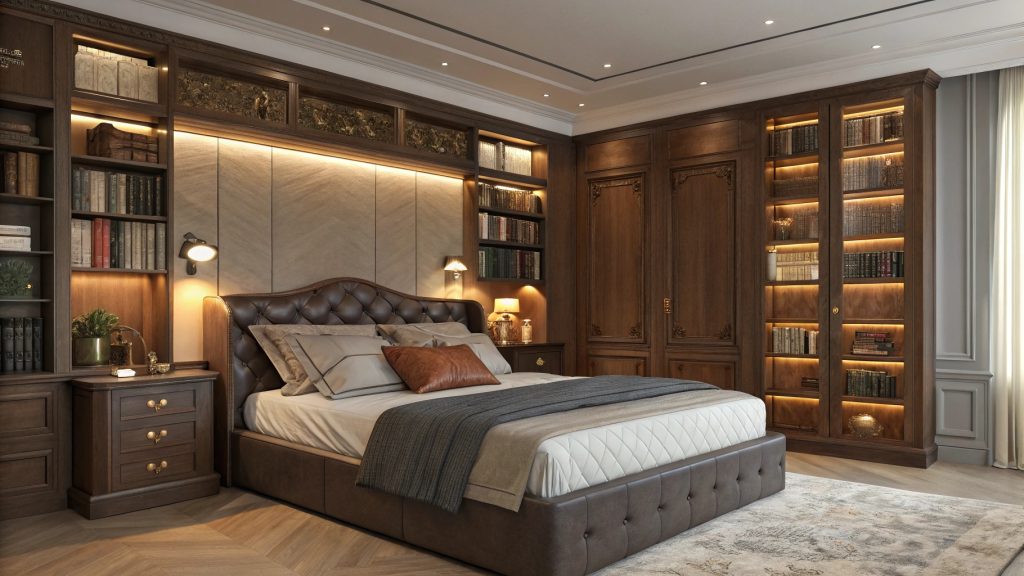
Literary enthusiasts will love this design where the entire headboard appears to be a floor-to-ceiling bookshelf, but select “books” are actually hidden compartments and secret storage areas. Some books pull out to reveal jewelry storage, others hide electronics, and some conceal larger valuables – all while maintaining the authentic appearance of a personal library.
Key Features:
- Design: Floor-to-ceiling bookshelf headboard with false book spines concealing various storage compartments, hidden hinges, and magnetic closures.
- DIY Tip: Create false book spines using real book covers mounted on hinged boxes; vary compartment sizes and add felt lining for delicate items.
- Space Efficiency: Combines extensive book storage with hidden compartment storage without requiring additional furniture pieces.
- Organization: Secret compartments can be sized for specific valuables, with some featuring specialized inserts for jewelry, watches, or documents.
- Versatility: Accommodates both real books and hidden storage, with compartments adaptable to changing security and storage needs.
7. The Pneumatic Tube Delivery System Bed

Inspired by old-fashioned bank drive-throughs, this futuristic bed incorporates a pneumatic tube system that can deliver items from storage areas throughout the room directly to your bedside. Imagine lying in bed and having your phone charger, reading glasses, or midnight snack delivered through an elegant tube system built into the bed frame.
Key Features:
- Design: Integrated pneumatic tube network with decorative brass or chrome tubing, quiet air compressor system, and multiple delivery endpoints.
- DIY Tip: Use aquarium air pumps and food-grade tubing; create carrier capsules from clear plastic containers with soft sealing rings.
- Space Efficiency: Connects remote storage areas to bedside without requiring paths or additional furniture for accessing stored items.
- Organization: Remote storage areas can be specialized by item type, with the tube system providing instant access to any stored item.
- Versatility: System can be expanded to connect with other rooms or furniture pieces, creating a whole-home delivery network.
8. The Transformer Accordion Expansion Bed
This space-age design starts as a compact single bed but can mechanically expand to accommodate guests by unfolding additional sleeping and storage sections. Like a sophisticated piece of origami, the bed transforms through a series of accordion-style panels that reveal hidden mattress sections and storage compartments.
Key Features:
- Design: Motorized accordion mechanism with multiple folding sections, hidden casters for movement, and synchronized extension system with memory foam segments.
- DIY Tip: Use heavy-duty drawer slides and linear actuators; ensure all moving parts have adequate support and safety stops to prevent over-extension.
- Space Efficiency: Transforms from single to king-size bed while revealing additional storage compartments during expansion process.
- Organization: Each expansion section contains specific storage zones that become accessible only when extended, maximizing space utilization.
- Versatility: Perfect for guest rooms, studio apartments, or anywhere flexible sleeping arrangements are needed without permanent space commitment.
9. The Living Green Wall Storage Bed
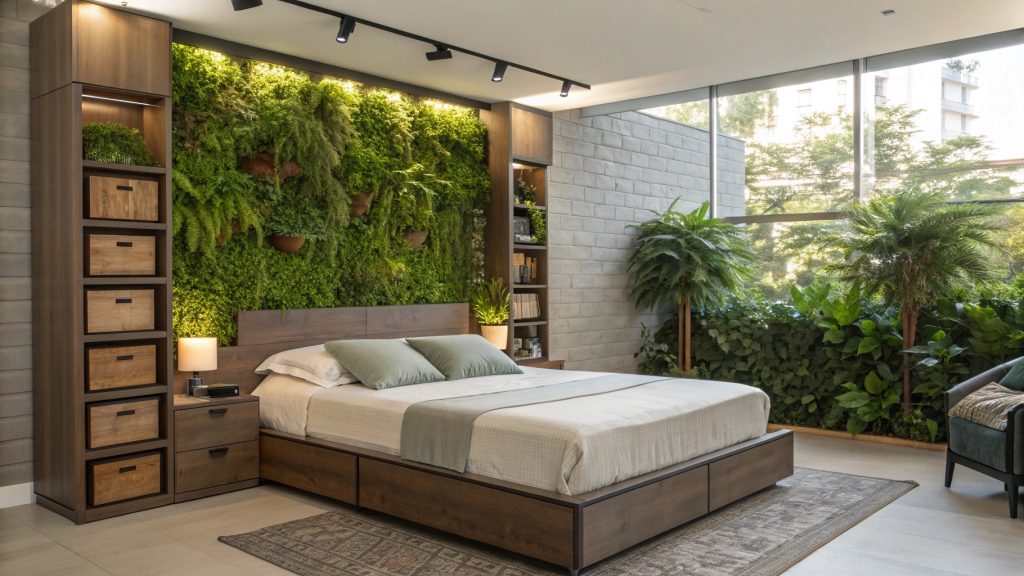
Combine biophilic design with practical storage in this living headboard that incorporates vertical gardening systems alongside traditional storage compartments. The headboard features integrated planters, irrigation systems, and grow lights, creating a bedroom oasis while providing hidden storage behind the greenery.
Key Features:
- Design: Vertical garden system with integrated drip irrigation, LED grow lights, modular planting containers, and hidden storage compartments behind plant areas.
- DIY Tip: Use hydroponic tower systems with built-in water pumps; install moisture barriers and proper drainage to protect stored items.
- Space Efficiency: Combines air purification, visual appeal, and storage functionality in a single vertical surface without additional floor space.
- Organization: Storage compartments are climate-controlled and moisture-protected, perfect for linens, clothing, or electronics that benefit from stable conditions.
- Versatility: Plant selection can be seasonal or based on preferred aromatherapy benefits, while storage adapts to changing needs.
10. The Rotating Globe Storage Sphere Bed

Replace traditional nightstands with rotating storage spheres that orbit around the bed on ceiling-mounted tracks. These planetary storage units can be positioned anywhere around the bed’s perimeter and contain specialized storage for different needs – one might be a mini-fridge sphere, another a wardrobe sphere, and a third a tech station sphere.
Key Features:
- Design: Ceiling-mounted circular track system with motorized spherical storage units, various specialized sphere interiors, and wireless control system.
- DIY Tip: Use heavy-duty curtain track systems and modify furniture balls with internal shelving; add casters and motor drives for automated movement.
- Space Efficiency: Maximizes storage accessibility while keeping floor space completely clear, with storage that moves to you rather than vice versa.
- Organization: Each sphere specializes in different storage types – clothing, electronics, refreshments, or personal care items with appropriate internal configurations.
- Versatility: Spheres can be repositioned for different activities (work, relaxation, sleep) and easily moved out of the way when not needed.
11. The Retractable Floor Storage Bed
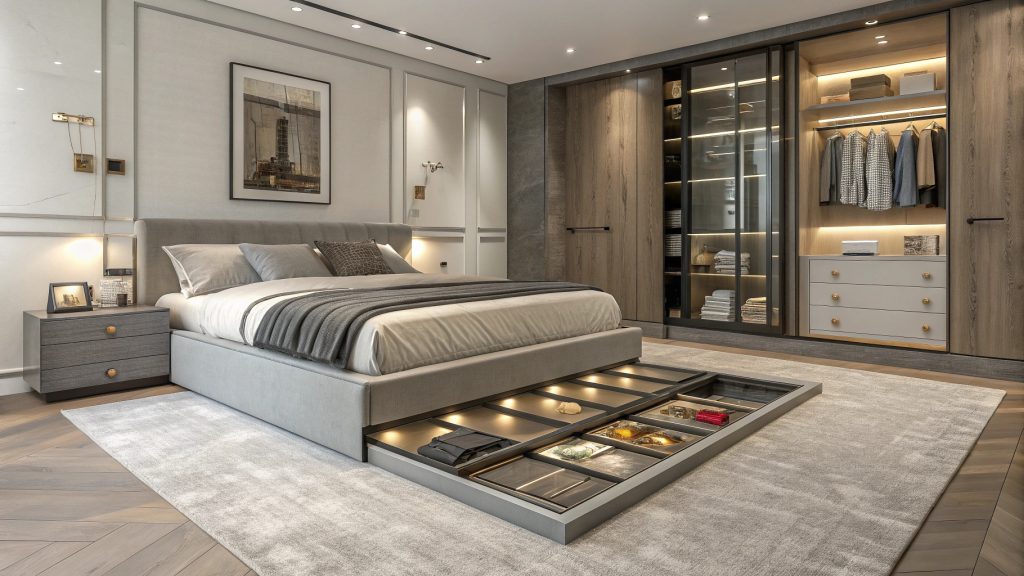
This ground-breaking design features a bed platform that sits atop a retractable floor system. With the push of a button, sections of the bedroom floor slide away to reveal deep storage wells that can accommodate large items like seasonal decorations, luggage, or even exercise equipment that rises up on hydraulic lifts when needed.
Key Features:
- Design: Motorized sliding floor panels with hydraulic lift platforms, waterproof storage wells, and integrated LED lighting with smart home integration.
- DIY Tip: Use heavy-duty drawer slides rated for floor loads; ensure proper waterproofing and consider adding sump pump systems for basement installations.
- Space Efficiency: Utilizes space below floor level that typically goes unused, effectively adding a hidden basement storage level to any room.
- Organization: Deep wells accommodate large seasonal items or equipment that would otherwise require dedicated storage rooms or rental units.
- Versatility: Storage wells can be configured for different purposes – wine storage, emergency supplies, or even hidden safe rooms with proper ventilation.
12. The Magnetic Levitation Storage Bed
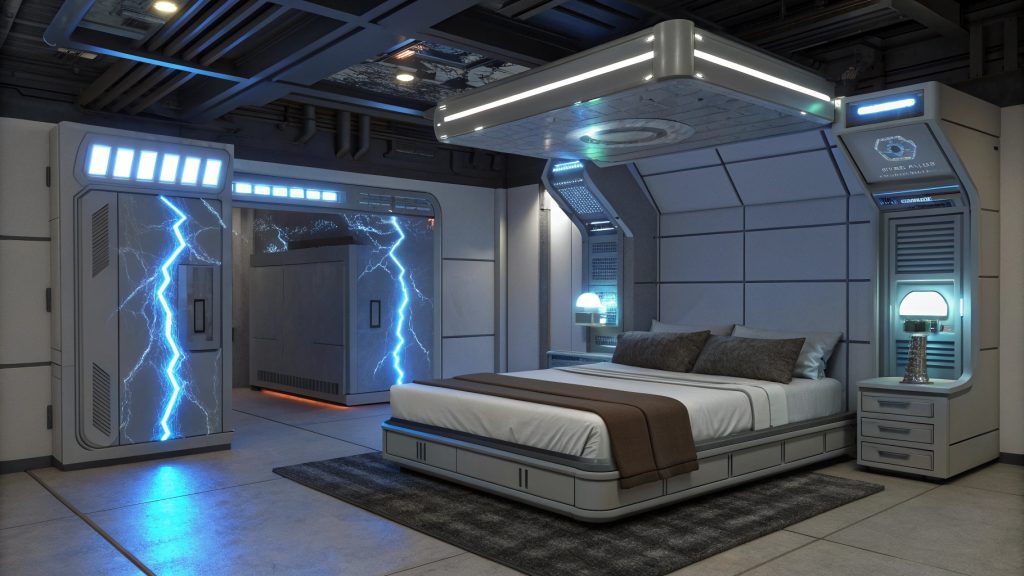
Push the boundaries of physics and design with a bed that uses magnetic levitation to suspend storage compartments around the sleeping area. These floating storage pods can be repositioned using magnetic field controls and create an otherworldly bedroom environment where storage literally floats in mid-air.
Key Features:
- Design: Electromagnetic field generators in bed frame, levitating storage pods with rare earth magnets, wireless power transmission, and gyroscopic stabilization systems.
- DIY Tip: Use powerful neodymium magnets and electromagnetic coils; ensure proper shielding and safety systems to prevent magnetic interference with electronics.
- Space Efficiency: Floating storage doesn’t require floor or wall space, creating maximum accessibility while maintaining completely open floor areas.
- Organization: Levitating pods can be programmed to move to specific positions for different activities and store various items in specialized floating containers.
- Versatility: System can be expanded with additional pods and repositioned for optimal convenience based on daily routines or room layouts.
13. The Infinity Mirror Storage Illusion Bed
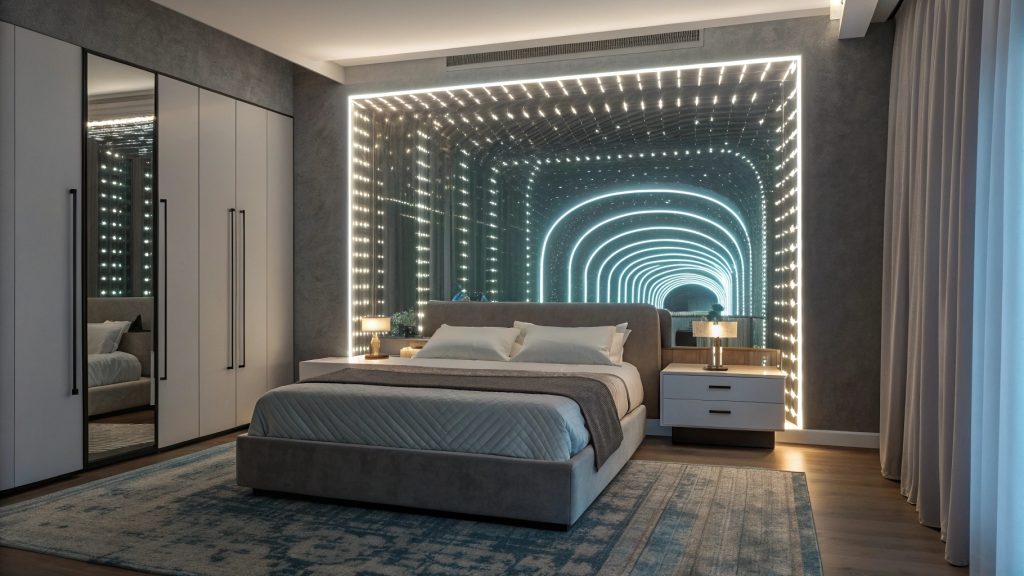
Create mind-bending visual effects while maximizing storage with a headboard that incorporates infinity mirror technology. The mirrors create the illusion of endless depth while concealing substantial storage compartments behind what appears to be an infinite tunnel of light and reflection.
Key Features:
- Design: Two-way mirror and one-way mirror system with LED strip lighting, hidden storage compartments behind mirrors, and programmable color-changing effects.
- DIY Tip: Use acrylic two-way mirrors and LED strips; ensure proper spacing between mirrors and add hidden hinges for access to storage behind the effect.
- Space Efficiency: Creates dramatic visual impact while hiding extensive storage in the apparently infinite space behind the mirror illusion.
- Organization: Storage compartments remain completely hidden until accessed, perfect for valuable items or personal belongings requiring discretion.
- Versatility: LED colors can be programmed for different moods or times of day, while storage adapts to various personal items and valuables.
14. The Origami Folding Storage Bed
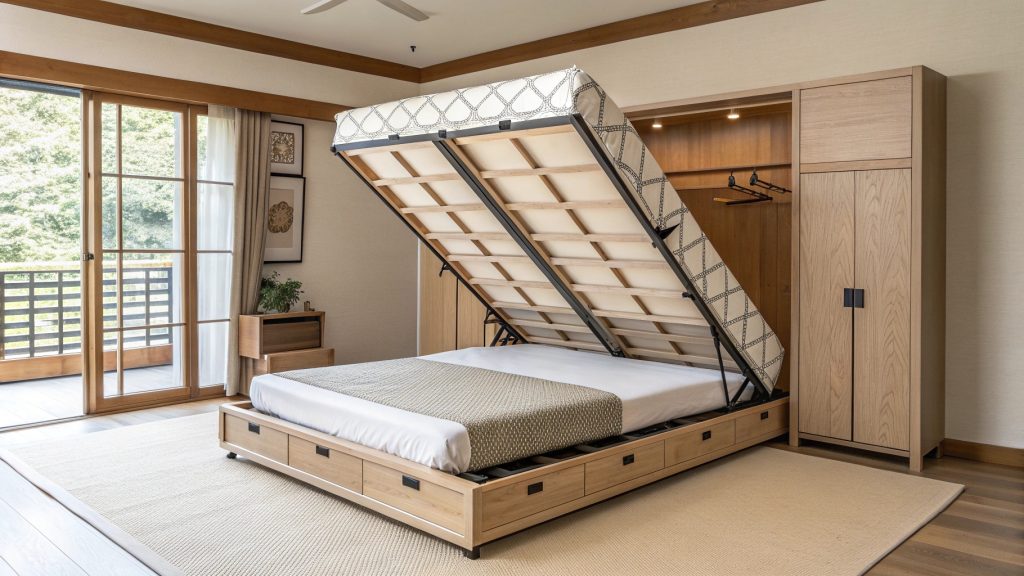
Inspired by Japanese origami, this bed frame can be folded and reconfigured into multiple forms – expanding from a compact chair to a full bed with various storage configurations revealed through the folding process. Each fold reveals new storage compartments while maintaining structural integrity and comfort.
Key Features:
- Design: Precision-engineered folding mechanism with multiple hinge points, lightweight yet strong materials, and integrated storage that appears during transformation.
- DIY Tip: Use piano hinges at all fold points with proper weight distribution calculations; add locking mechanisms for each configuration position.
- Space Efficiency: Transforms between multiple furniture pieces while maintaining consistent storage capacity regardless of current configuration.
- Organization: Different folding configurations reveal different storage compartments, allowing specialized storage for various life modes (work, sleep, entertainment).
- Versatility: Perfect for micro-apartments, temporary living situations, or anywhere maximum flexibility is required from limited space.
15. The Holographic Display Storage Bed
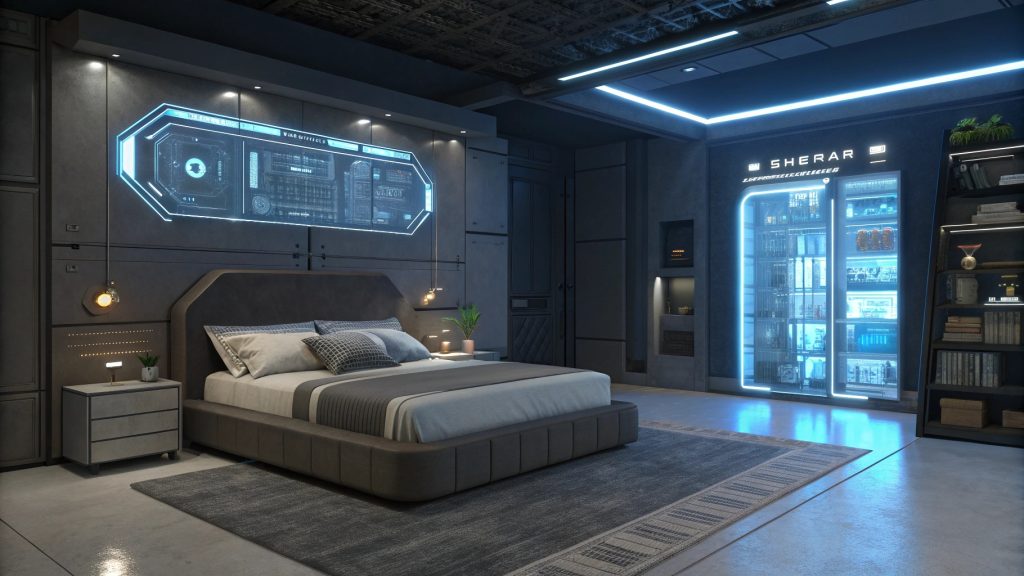
Integrate cutting-edge technology with this bed featuring holographic displays that show the contents of storage compartments without opening them. The system creates 3D holographic inventories of stored items, allowing you to locate and access anything without physically searching through compartments.
Key Features:
- Design: Integrated holographic projection system, RFID tracking for stored items, gesture control interface, and automated inventory management software.
- DIY Tip: Use smartphone-based holographic pyramid displays and RFID stickers on stored items; create simple inventory apps with visual search capabilities.
- Space Efficiency: Eliminates time spent searching through storage compartments while maximizing storage density through precise organization tracking.
- Organization: Digital inventory system tracks exact location of every stored item with visual confirmation through holographic display interface.
- Versatility: System learns usage patterns and can automatically suggest optimal storage locations for new items based on access frequency.
Complete Guide: How to Organize and Create Innovative Storage Bed Frame Ideas
Phase 1: Research & Foundation Building
Market Analysis Process
Start by studying existing furniture markets to identify gaps and opportunities. Visit furniture stores, browse online catalogs, and analyze customer reviews to understand common complaints and unmet needs. Look for phrases like “not enough storage,” “takes up too much space,” or “wish it had…” in reviews. This reveals real-world problems your designs can solve.
Trend Research Methods
- Technology Integration: Study emerging technologies (IoT, smart home, robotics) and consider how they could enhance furniture functionality
- Space Living Trends: Research micro-apartments, tiny homes, and minimalist living to understand space constraints
- Material Innovation: Follow developments in new materials, manufacturing processes, and sustainable options
- Lifestyle Changes: Analyze how remote work, urban living, and changing demographics affect furniture needs
Cross-Industry Inspiration
Look beyond furniture for inspiration:
- Automotive: Hidden compartments, hydraulic systems, space efficiency
- Aerospace: Weight optimization, multi-functional components, precision engineering
- Architecture: Space transformation, modular systems, structural innovation
- Gaming: Modular design, customization, interactive elements
Phase 2: Creative Ideation Framework
Systematic Brainstorming Approach
Step 1: Problem Identification
- List specific storage challenges (seasonal items, small spaces, accessibility)
- Identify user frustrations with current solutions
- Note lifestyle factors affecting storage needs
Step 2: Constraint-Based Creativity
- Set specific limitations (budget, space, materials) to spark creative solutions
- Use “What if…” scenarios: “What if gravity didn’t exist?” “What if space could be folded?”
- Apply SCAMPER technique (Substitute, Combine, Adapt, Modify, Put to other use, Eliminate, Reverse)
Step 3: Technology Integration Matrix Create a grid matching storage needs with available technologies:
Storage Need | Available Tech | Creative Application
Accessibility | Robotics      | Automated retrieval
Space Limits | Hydraulics     | Expanding surfaces
Organization | RFID/AI        | Smart inventory
Security     | Biometrics     | Access control
Visual Inspiration Techniques
- Mood Boarding: Collect images representing feelings, not just furniture
- Nature Biomimicry: Study how animals and plants solve storage/space problems
- Science Fiction Analysis: Extract realistic technologies from fictional concepts
- Historical Innovation: Adapt old mechanisms with modern materials
Phase 3: Concept Development Structure
Idea Validation Framework
Feasibility Assessment:
- Technical Viability: Can it actually be built with current technology?
- Cost Effectiveness: Would it be affordable for target market?
- Safety Compliance: Does it meet furniture safety standards?
- User Experience: Is it intuitive and beneficial to use?
Innovation Scoring System: Rate each idea on:
- Novelty (1-10): How unique is the concept?
- Practicality (1-10): How usable is it in real life?
- Market Appeal (1-10): Would people want this?
- Technical Complexity (1-10): How difficult to manufacture?
Concept Refinement Process
Iteration Methodology:
- Initial Concept: Basic idea with core functionality
- Enhancement Layer: Add technology, aesthetics, additional features
- Practicality Check: Simplify overly complex elements
- User Journey Mapping: Walk through actual usage scenarios
- Final Optimization: Balance innovation with practicality
Phase 4: Content Organization Strategy
Information Architecture
Consistent Structure Template:
- Hook Title: Grab attention with unique naming
- Concept Overview: Paint the vision clearly
- Technical Details: Practical implementation info
- User Benefits: Why someone would want this
- Creation Guide: How to actually build/implement it
Writing Variation Techniques
Avoiding Pattern Fatigue:
- Opening Styles: Rotate between question, statement, scenario, challenge
- Tone Variations: Technical, storytelling, conversational, dramatic
- Perspective Shifts: User viewpoint, designer viewpoint, problem-focused, solution-focused
- Content Flow: Short punchy sentences vs. detailed explanations
Engagement Maintenance:
- Use different metaphors and analogies for each concept
- Vary technical complexity levels
- Include unexpected elements (humor, surprise, wonder)
- Reference different lifestyle contexts
Phase 5: Technical Documentation Process
Detailed Specification Development
Key Features Section Framework:
- Design: Physical description, materials, mechanisms
- DIY Tips: Practical building advice for makers
- Space Efficiency: Quantified benefits and measurements
- Organization: How it improves storage/access
- Versatility: Adaptability and future-proofing
AI Prompt Optimization
Prompt Engineering Best Practices:
- Specificity: Include exact materials, colors, lighting conditions
- Style Direction: Reference photography styles, architectural movements
- Technical Details: Mention mechanisms, proportions, scale references
- Atmosphere: Describe mood, ambiance, emotional impact
- Quality Indicators: Add terms like “photorealistic,” “architectural visualization”
Prompt Structure Template:
[Furniture Type] + [Key Innovation] + [Setting Description] +
[Technical Details Visible] + [Aesthetic Style] + [Lighting/Mood] +
[Photography Style] + [Quality Descriptors]
Phase 6: Quality Control & Refinement
Content Review Process
Technical Accuracy Check:
- Verify all mechanisms are physically possible
- Ensure safety considerations are addressed
- Confirm materials and construction methods are realistic
- Check that measurements and specifications make sense
Market Relevance Validation:
- Confirm each idea solves real problems
- Ensure target audience alignment
- Verify price point feasibility
- Check for similar existing products
Continuous Improvement System
Feedback Integration:
- Track which ideas generate most interest
- Note common questions or confusion points
- Identify patterns in successful concepts
- Refine approach based on audience response
Innovation Pipeline:
- Maintain idea bank for future development
- Cross-reference concepts for combination opportunities
- Update ideas based on new technology developments
- Build on successful concept themes
Phase 7: Implementation Strategy
Prototype Development Path
Progressive Build Approach:
- Paper Prototype: Sketch and test basic concept
- Digital Modeling: 3D render to test proportions
- Scaled Model: Build miniature to test mechanisms
- Component Testing: Test individual systems separately
- Full Prototype: Build complete functional version
Collaboration Network Building
Expert Consultation:
- Engineers: For structural and mechanical feasibility
- Interior Designers: For aesthetic and practical integration
- Manufacturers: For production viability and cost estimation
- Users: For real-world testing and feedback
This systematic approach ensures that innovative ideas are both creative and practical, with clear pathways from concept to reality. The key is balancing imagination with engineering reality while maintaining focus on solving real user problems.