
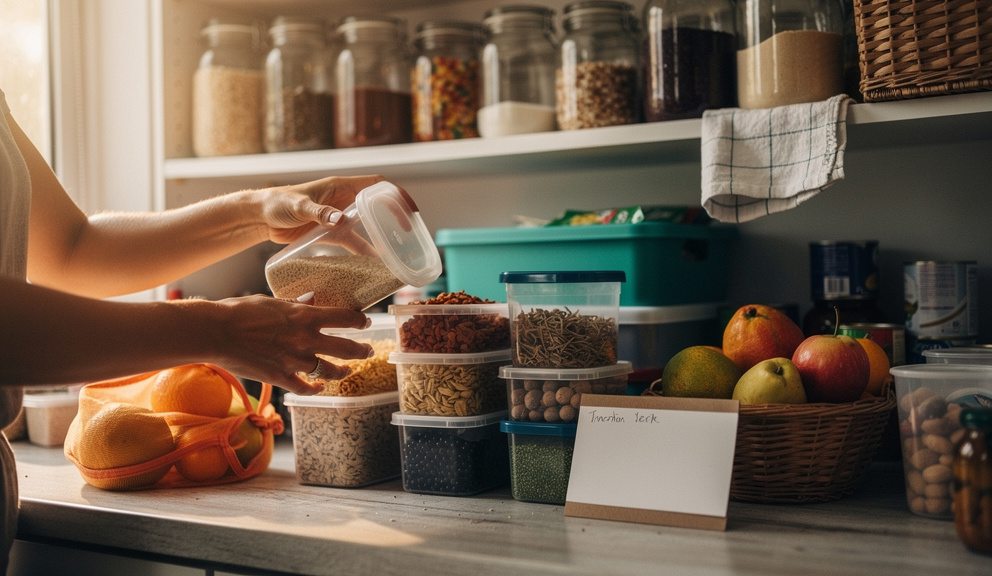
Pantry Organization Ideas That Cut Food Waste and Save Bills
The average American household of four throws away $2,913 of food a year, according to the U.S. EPA's April 2025 report "Estimating the Cost of Food Waste to American Consumers." A well-organized pantry cuts that loss by making food visible, grouping items by category, keeping expiration dates in view, and rotating older stock to the front so nothing gets buried and forgotten. You don't need a full remodel: labeled zones, can risers, a few bins, and a "use-soon" shelf do most of the work. The financial payoff is direct, because food you can see is food you actually eat.
Pantry Organization Ideas: Key Takeaways
- U.S. households waste an estimated $728 per person and $2,913 per four-person household annually (EPA, April 2025), so pantry visibility protects real money.
- The core method: remove and inspect everything, group by category, create labeled zones, date-label items, and rotate first-in, first-out.
- Deep cabinets hide food past 22 inches; pull-out bins, turntables, and stepped risers bring the back into view.
- Start with boxes and bins you already own. Buy specialized containers only after a storage problem repeats.
- Measure success by fewer duplicate purchases, fewer expired items, and a lower grocery bill, not by how the shelves photograph.
- Best-by dates signal quality, not safety, so use judgment and product-specific storage guidance instead of tossing on the date alone.
How does pantry organization actually reduce food waste?
Pantry organization reduces waste by fixing the root cause of most household food loss: you forget what you already have. When food is grouped, labeled, and visible, you buy fewer duplicates, notice expiring items in time, and eat down stock before it spoils. ReFED's 2025 U.S. Food Waste Report identifies household food waste as the single largest source of surplus food in the country.
The mechanism is simple. Roughly 31% of the U.S. food supply, about 73.9 million tons in 2023, was estimated as surplus by ReFED. At the household level, the UN Food Waste Index 2024 figure cited in the USDA and EPA National Strategy for Reducing Food Loss and Waste put U.S. household waste near 73 kilograms per person per year. A lot of that is food that got shoved to the back and expired unseen.
Four habits do the heavy lifting:
- Visibility. If you can see a jar of peanut butter, you won't buy a third one.
- Grouping. Keeping all the canned goods together shows you exactly how much you own.
- Date monitoring. Labeling purchase or opening dates flags what to use next.
- First-in, first-out rotation. Older items move to the front so they get used before new ones.
For couples and roommates sharing a budget, visibility also settles a common argument. When both people can glance at the pantry and see what's stocked, nobody double-buys, and the weekly "did we already have this?" back-and-forth disappears.
Tip: Before your next grocery trip, photograph your pantry shelves on your phone. Shop from the photo. This one habit prevents the most common source of waste, buying something you already own.

What are the best pantry organization ideas for deep cabinets and small spaces?
The best ideas make hard-to-see areas visible: pull-out bins, turntables, and stepped risers for deep shelves, plus vertical stacking and door-mounted racks for small kitchens. Deep cabinets are the top pantry complaint on r/organizing, where users repeatedly ask how to reach food stored more than 22 inches back. Anything past arm's reach gets forgotten, which means it gets wasted. For a practical visual example, see this deep pantry makeover from cluttered to organized.
For deep cabinets, use one of four fixes:
- Pull-out bins so the back slides forward to you instead of you reaching in.
- Turntables (lazy Susans) for oils, sauces, and jars, spinning the back into view.
- Stepped risers for canned goods so back rows sit higher and stay readable.
- Backstock assignment. Dedicate the deep, awkward zone to overflow you check monthly, not daily items.
For small kitchens and renters, work vertical and reversible. Over-the-door racks, tension-rod shelves, and stackable clear bins add capacity without drilling or damaging walls. Our guide to wall storage ideas that double your space covers renter-friendly options, and the small space storage hacks walkthrough applies directly to tight pantries.
Households mixing everyday food with emergency supplies, a pattern common on r/TwoXPreppers, should physically separate the two zones. Keep a labeled long-term backstock area with dated rotation, and a front working zone for the week. Mixing them guarantees you'll either raid the emergency stock or let the working stock expire.
Sentiment on r/OrganizationPorn is consistent: people value refreshes that make food easier to grab, not arrangements built for photos. Prioritize function.
How do I organize a pantry step by step?
Do a full reset in one session: empty the pantry, inspect and toss what's expired, group like items, assign labeled zones, date-label containers, and set a first-in, first-out rule. The whole process takes two to three hours for a standard pantry and gives you an accurate inventory to shop against.
Follow these six steps in order:
- Empty and inspect. Pull everything out. Check dates and condition. Discard genuinely spoiled food and note what's near expiry.
- Wipe the shelves. A clean surface makes the reset stick. Users on r/OrganizationPorn describe this lightweight decluttering as more sustainable than a big one-time makeover.
- Group by category. Cluster grains, canned goods, baking supplies, snacks, breakfast items, and backstock.
- Assign zones. Give each category a fixed shelf or bin. Put daily items at eye level and backstock up high or deep.
- Add a use-soon shelf. Front-and-center, reserved for items expiring within two weeks. Check it before every meal decision.
- Date-label and rotate. Write the purchase or opening date on containers. Always shelve new stock behind old.
Sample zones for a family pantry: breakfast, grains and pasta, canned goods, snacks, baking, use-soon, and backstock. Families with young kids should keep a low, safe snack zone children can reach and lock or elevate anything hazardous, a request that comes up often on r/organizing.
Then schedule a recurring 15-minute check, weekly or biweekly, timed just before grocery shopping. This is where the savings compound. Pairing the pantry check with a written grocery list and a set food budget turns organization into a repeatable cash-flow habit. If you assign a fixed grocery envelope and shop your existing inventory first, you spend the budget on gaps, not duplicates.

Do I need special containers and apps, or can I do it cheaply?
Start free, upgrade only when a problem repeats. Reuse the boxes and bins you already own, organize by category and frequency of use, and buy specialized containers or an inventory app only after you've identified a persistent storage or tracking problem. Users on r/Homeorganization are explicit: they want affordable solutions and refuse to spend a fortune on accessories.
Here's a spending decision framework:
| Situation | Best option | Approximate cost |
|---|---|---|
| First reset, unsure what you need | Reuse shoeboxes, jars, and existing bins | $0 |
| Loose packets sliding around | Dollar-store bins organized by category | $1-5 each |
| Dry goods going stale, pests, or messy stacking | Airtight modular containers | Set prices vary; see retailer |
| Chronic duplicate buying, large inventory | Free inventory app | $0 to start |
| Tracking 200+ items or long-term backstock | Paid app tier | See app |
Airtight containers help with stacking, portion control, and keeping flour or cereal fresh, but they only cut waste if you label them. Write the food name and the purchase or opening date on removable labels; an undated, unlabeled container just moves the guessing game into a prettier jar. As a reference point, OXO listed its POP Stainless Steel 12-piece set at $169.99 in 2026 and POP removable labels at $5.24, so a full container conversion is a real expense to justify against your waste.
For tracking, Pantry Check offers a free tier supporting up to 200 inventory items, with larger inventory-storage plans available in the app. Third-party 2026 comparisons reported subscription examples around $12 per year for roughly 2,000 items and $29.99 per year for about 10,000 items; verify current pricing in the app before you buy. Many food-inventory apps now advertise photo recognition, AI-assisted scanning, recipe suggestions, and expiry reminders.
Warning: An app or container set that costs more per year than the food you're saving is a net loss. If your household wastes $728 per person annually (the EPA's 2025 per-person figure), a $30 app that cuts waste by even 15% pays for itself. A $170 container set needs a clearer, ongoing benefit before it makes budget sense.
For low-cost bin ideas, the dollar store organization hacks guide and the IKEA hacks for staying organized both cover pantry-ready solutions under $10.
A worked example: what does an organized pantry save a family of four?
A U.S. family of four wastes an estimated $2,913 of food per year (EPA, April 2025). Here's how a $40 pantry reset can claw back a meaningful share of that.
Take the Reyes household, two adults sharing bills and two kids. Their starting problem: a deep pantry where the back was invisible, so they routinely rebought pasta sauce and let bread and produce-adjacent staples expire. Their setup cost:
- 6 dollar-store bins for category zones: $18
- 1 pack of stepped can risers: $12
- Removable labels and a marker: $6
- Free Pantry Check tier (under 200 items): $0
- Total: $36
The routine: a full reset on a Sunday, a use-soon shelf at eye level, and a 15-minute inventory check every Friday before shopping. Both partners shop from the same phone photo, which ended the duplicate-buying arguments.
Suppose the reset cuts their waste by 25%, a conservative outcome when visibility and rotation improve. That's roughly $728 recovered in year one against a $36 outlay. Even a 15% reduction returns about $437. The container-heavy alternative, a $169.99 OXO set plus bins, would still work, but the $36 version captures nearly the same savings without the upfront cost r/Homeorganization users resist.
The lesson: the return comes from the system (zones, dates, rotation, a weekly check), not from expensive containers. Spend on habits first, hardware last.
Bottom line
Pantry organization is one of the highest-return, lowest-cost money moves a household can make, because it directly attacks the $728-per-person food waste the EPA measured in 2025. Empty and inspect, group into labeled zones, date your items, rotate first-in, first-out, and run a 15-minute check before every shop. Reuse what you own before buying containers. Tie the routine to a grocery budget and a shop-from-inventory list, and the pantry stops being a place food goes to expire.
Frequently asked questions
What are the best pantry organization ideas for saving money?
The highest-return ideas are free or cheap: group food by category so you can see what you own, add a "use-soon" shelf at eye level for items expiring soon, label containers with purchase dates, and rotate older stock to the front. These habits cut duplicate buying and expired-item waste, the two biggest drivers of the EPA's $2,913 annual food-waste cost for a family of four.
How do I organize a deep pantry cabinet where I can't see the back?
Use pull-out bins, turntables, or stepped risers to bring the back forward, or assign the deep zone to backstock you check monthly instead of daily items. Deep cabinets, especially anything past 22 inches, are the top pantry complaint on r/organizing precisely because hidden food gets forgotten and wasted. The goal is making every item visible or reachable without unpacking the shelf.
Are airtight containers worth it for a pantry?
Only if you have a repeating problem they solve, like stale dry goods, pests, or messy stacking, and only if you label them with dates. Airtight sets help with freshness and portioning, but a full conversion is costly; OXO listed a 12-piece POP set at $169.99 in 2026. Start with free or dollar-store bins and buy containers after a storage problem proves persistent.
Should I use a pantry inventory app?
An app helps if you chronically forget what you have or manage a large stock. Pantry Check offers a free tier for up to 200 items, with paid plans reported around $12 per year for roughly 2,000 items in 2026 comparisons. Justify the cost against your waste: if a $30 app cuts even 15% of a $728 per-person loss, it pays for itself.
Does the best-by date mean food is unsafe after that day?
No. Best-by and sell-by dates indicate quality, not safety, for most shelf-stable foods. Use your judgment, check for spoilage signs, and follow product-specific storage guidance rather than tossing everything on the printed date. Blindly trusting labels causes needless waste, though genuinely spoiled or unsafe items should always be discarded.
How often should I reorganize or check my pantry?
Do one full reset up front, then a 15-minute check every week or two, timed right before grocery shopping. Users on r/OrganizationPorn find a lightweight recurring refresh more sustainable than a big one-time makeover. The pre-shop check is where savings compound, because you shop from what you already have and buy only the gaps.